Despite ongoing security challenges across Nigeria, more than 500 senior military officers, including Major Generals, Brigadier Generals, Rear Admirals, and Air Vice Marshals, have been compelled to retire early following successive changes in the leadership of the Armed Forces during the administrations of former President Muhammadu Buhari and President Bola Ahmed Tinubu.
According to findings, the mass retirements, which spanned the Nigerian Army, Navy, and Air Force between 2015 and 2023, were consistent with a long-standing military tradition requiring senior officers of the same rank or higher than newly appointed service chiefs to disengage.
Military authorities have often justified the policy as necessary to maintain discipline, hierarchy, and operational efficiency. Data gathered from multiple reports indicate that at least 500 top officers have exited the services in the last eight years, though insiders suggest the actual number may be closer to 900.
Okay News reports that the first wave of retirements followed Buhari’s appointment of new service chiefs in July 2015, which included Lt. Gen. Tukur Buratai as Chief of Army Staff, Air Marshal Sadique Abubakar as Chief of Air Staff, and Vice Admiral Ibok-Ete Ibas as Chief of Naval Staff. Over 100 senior Army officers, including several Major and Brigadier Generals, were retired, alongside about 20 senior Navy officers.
A similar shake-up occurred in 2021 when Buhari appointed a new set of service chiefs — Air Marshal Isiaka Amao for the Air Force, the late Lt. Gen. Ibrahim Attahiru for the Army, and Vice Admiral Awwal Gambo for the Navy. That transition saw 123 Army generals, 50 senior Air Force officers, and another 50 senior naval officers leave service.
Following the death of Gen. Attahiru in May 2021, Buhari appointed Gen. Farouk Yahaya as Chief of Army Staff, triggering the voluntary retirement of more than 20 generals who were his seniors from Courses 35 and 36.
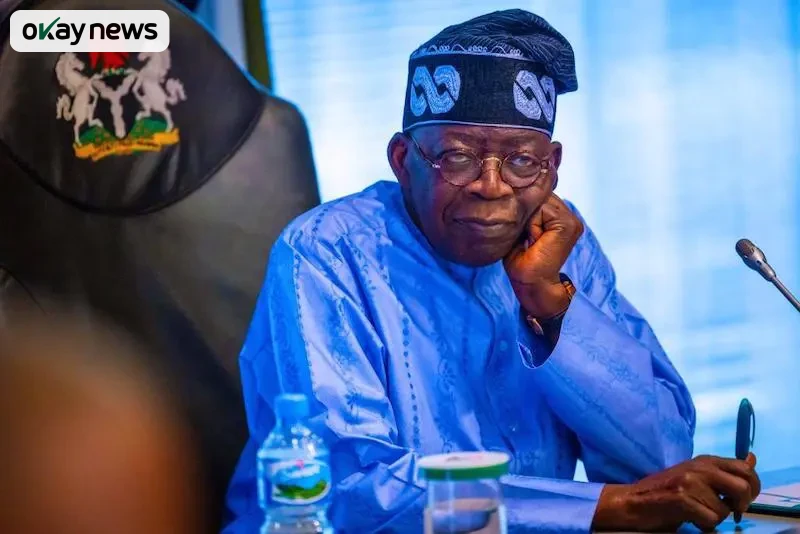
Under President Tinubu, the tradition continued. Two weeks after assuming office, the President announced new service chiefs on June 19, 2023. The appointments of the late Lt. Gen. Taoreed Lagbaja, Air Marshal Hasan Abubakar, and Vice Admiral Emmanuel Ogalla led to the retirement of 51 army generals, 49 Air Force officers, and 17 naval officers.
Last Friday, Tinubu again reshuffled the military hierarchy, appointing Gen. Olufemi Oluyede as Chief of Defence Staff, Maj.-Gen. Waidi Shaibu as Chief of Army Staff, Air Vice Marshal Sunday Aneke as Chief of Air Staff, and Rear Admiral Idi Abbas as Chief of Naval Staff, while Maj.-Gen. Emmanuel Undiendeye retained his position as Chief of Defence Intelligence.
Military sources predict that around 60 senior officers may be affected by this latest change if the same policy is upheld.
Reacting, retired General Ishola Williams criticized the trend, calling it “a reflection of the military era.”
“Once the government replaces the service chiefs, it means the former set must retire because they cannot serve under their juniors,” Williams said. “It’s a bad practice that should change. You can’t just wake up and tell someone to leave without prior notice. It’s abnormal.”
He proposed a system in which the Chief of Defence Staff serves directly under the President, while other service chiefs and commanders report in a structured hierarchy that ensures a natural order of succession.
Similarly, retired General Aliyu Momoh commended Tinubu for his decisive approach to reshuffling the Armed Forces but urged him to go further by dismantling entrenched cabals.
“I must commend the President; he has the right to hire and fire. But he should also deal with the cabals within and outside the military. If he doesn’t, even in eight or ten years, the same problems will persist,” Momoh warned.
Retired Brigadier General Adewinbi described the mass retirements as part of an established tradition.
“There is nothing we can do about it,” he said. “You can’t tell the President who to appoint. Many of us have been victims of this practice.”
However, he recommended that the government harness the experience of retired officers by creating a reserve corps.
“What I think could be done is to enlist some of these generals in our reserves so that their expertise can still benefit the nation,” Adewinbi added.
Also speaking, retired Group Captain Sadique Shehu described the pattern as “unsustainable” and “structurally flawed.” According to him, Nigeria’s Armed Forces had as many as 960 generals in 2022 for a total strength of 235,000 personnel — nearly the same number as the United States, which has 1.3 million personnel.
“It’s a wasteful structure. The number of generals should be drastically reduced,” Shehu said.
He attributed the situation to political interference and weak legislative oversight.
“The National Assembly should set clear guidelines for appointing and retaining service chiefs. If we reduce the number of generals, each change in leadership won’t cause such massive retirements,” he advised.
Retired Major General Lasisi Abidoye, however, argued that the pyramid structure of the military naturally limits the number of officers who rise to the top.
“Routine retirement is good for the system,” Abidoye said. “No service chief should stay longer than three years; beyond that, it becomes counterproductive.”
Likewise, retired Major General P.J.O. Bojie described the current wave of retirements as a “routine exercise” in line with military practice.
“The situation demands it, and it’s normal,” he stated, downplaying the concerns over the large number of senior officers being retired.