



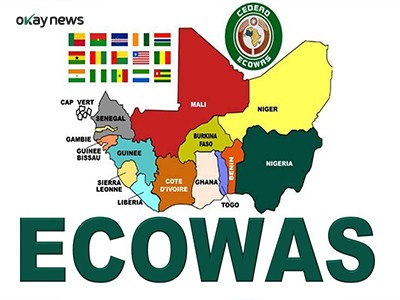
As the Economic Community of West African States (ECOWAS) marks its 50th anniversary, regional leaders and policymakers have called for unity, institutional reform, and renewed commitment to the bloc’s founding ideals amid political and security challenges confronting the subregion.
The 15-member regional body, established in 1975 to promote economic integration and political cooperation across West Africa, faces mounting pressure from military coups and governance crises.
Speaking at Future Proofing Regional Integration in Africa: The African Public Square Debate in Abuja, Nigeria’s capital, on Friday, the ECOWAS Commissioner for Political Affairs, Peace and Security, Ambassador Abdel-Fatah Musah, said the anniversary presented a moment for deep reflection, partnership, and renewal. Representing ECOWAS Commission President Dr Omar Touray, the commissioner commended the collaboration between the Africa Leadership Centre, the Amandla Institute, and the Mandela Institute for Policy and Leadership Advancement.
Reflecting on ECOWAS’ journey since its founding in 1975 by Nigerian military leader General Yakubu Gowon and Togolese President General Gnassingbé Eyadéma, Musah said the bloc’s early success lay in uniting diverse colonial and linguistic legacies—Francophone, Anglophone, and Lusophone—into a single regional organisation. He traced the organization’s evolution through three key phases: its founding during the Cold War, its response to post-Cold War civil conflicts in Liberia, Sierra Leone, and Côte d’Ivoire, and its current test amid renewed insecurity and democratic backsliding.
“West Africa finds itself at a very critical juncture in its evolution. We have a crisis of security and a crisis of democracy today. Democracy is in crisis, and it doesn’t seem like leaders have learned their lesson,” Musah stated. He cautioned against what he described as a hollowing out of competitiveness in electoral politics, where governments suppress opposition through exclusionary tactics.
Musah noted that the current popular method of political capture involves member states eliminating dangerous opponents—whether political parties or candidates—from the electoral process. He added that this was one of the reasons some member states decided to leave ECOWAS, referencing the recent departures of Mali, Burkina Faso, and Niger from the bloc.
The commissioner emphasized that insecurity across the Sahel region had worsened, intensifying pressure on the bloc to adapt. He announced that ECOWAS has begun a series of introspections leading toward a citizen-led process that will result in a new pact defining the region’s direction over the next 15 years.
Musah also stressed the centrality of young people and civil society in shaping the region’s future. “This generation must discover its mission—either to fulfil it or to betray it. The youth are not just the leaders of tomorrow; they are the drivers of change today,” the commissioner stated.
Co-founder of the Amandla Institute and former Governor of Ekiti State in southwestern Nigeria, Dr Kayode Fayemi, described the debate as a timely and critical conversation on the shifting dynamics within ECOWAS. Fayemi warned that the regional body risked becoming remote from the peoples of West Africa unless it undertook bold reforms to make the organisation more citizen-driven.
“There is an urgent need for a citizen-centred approach that responds to the real concerns of ordinary West Africans. It is evident that traditional military strategies alone are not an adequate way of tackling the complex threats posed by insurgent and terrorist groups,” Fayemi stated. He cautioned against military takeovers as a response to governance failures, noting that insecurity had only worsened in countries under military rule.
Vice President for International Engagement and Services at King’s College London, Professor Funmi Olonisakin, called for a complete reinvention of the West African integration project. She argued that the time has come to rethink regional cooperation 50 years after the founding of ECOWAS.
Founded in 1975 to promote economic integration, free movement, and political cooperation among its member states, ECOWAS has since played key roles in peacekeeping missions and defending democratic governance across West Africa. However, a spate of military coups in Mali, Guinea, Burkina Faso, and Niger, as well as persistent economic challenges, have tested the bloc’s unity at 50.



 marks its 50th anniversary, regional leaders and policymakers have called for unity, institutional reform, and renewed commitment to the bloc's founding ideals amid political and security challenges confronting the subregion.)