



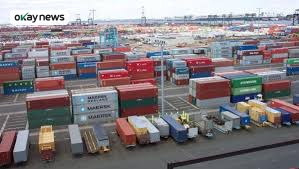
Nigeria’s heavy reliance on imported building materials is placing the housing sector at risk, according to the State of Lagos Housing Market Report (Volume 3).
Okay News report reveals that 70% of construction inputs are imported, leaving developers exposed to global supply shocks and currency volatility, despite Nigeria’s abundant raw materials. Limited local processing capacity has prevented a reduction in import dependence, highlighting structural weaknesses in the market.
The report recommends boosting local production through manufacturing hubs and incentives, optimising supply chains, enforcing consistent policies, and attracting domestic and foreign investment. These steps, it says, are critical to stabilising prices, improving efficiency, and addressing the country’s persistent housing deficit. Lagos, as Nigeria’s largest city and economic hub, reflects broader national trends, making its market analysis a bellwether for the rest of the country.
Construction in Nigeria has grown strongly, with the sector projected to reach NGN 25.72 trillion by 2025, reflecting a Compound Annual Growth Rate (CAGR) of 12.1% between 2020 and 2024. Forecasts indicate continued expansion at a CAGR of 6.4% from 2025 to 2029, potentially reaching NGN 35.38 trillion. Rapid urbanisation, population growth, and government infrastructure projects, including the Lagos Rail Mass Transit and road expansions, are key drivers of this demand.
However, rising material costs, inflation, bureaucratic bottlenecks, and high financing expenses continue to challenge the market. The report highlights that price increases, rather than pure volume growth, dominate the sector’s expansion, reducing affordability and efficiency. Lagos, as the epicentre of construction, experiences these pressures more intensely, making effective intervention in the city a potential blueprint for national reform.
Historical price data illustrate the scale of the challenge. In September 2015, an 8mm local iron rod cost N87,000 per 133 units, compared with N102,000 for imported versions. By 2023, prices for 10mm–16mm rods had risen to N800,000 per tonne, with sharp increases continuing through 2024 and 2025, nearly doubling in some cases. Aluminium products and other essential materials followed a similar trajectory, compounding costs for developers.
The report, published by the Roland Igbinoba Real Foundation for Housing and Urban Development, emphasises that tackling import dependence and supply inefficiencies is crucial to ensuring a stable, affordable, and sustainable housing market in Nigeria.



.)