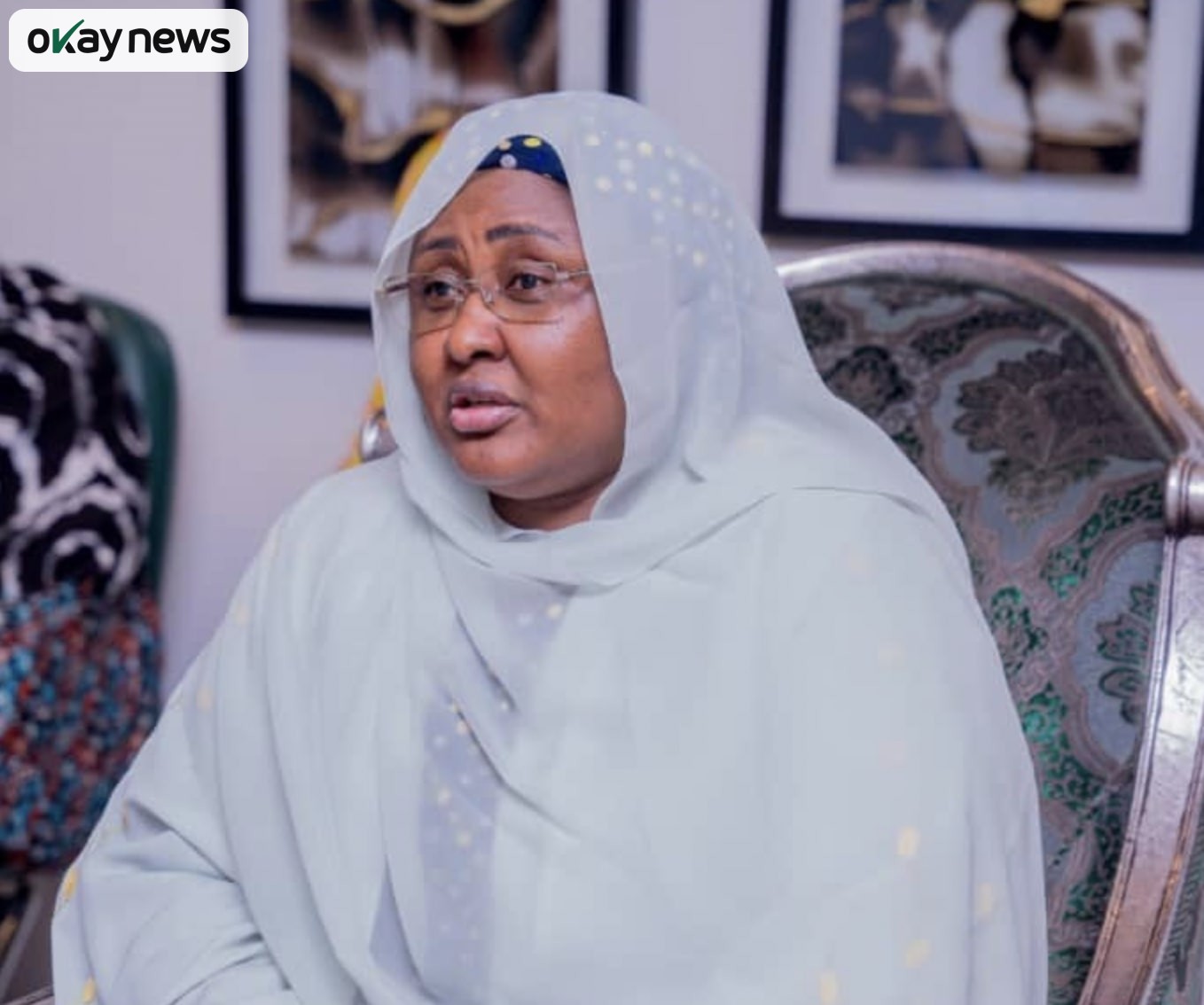
Former First Lady Aisha Buhari has given a detailed account of the events she believes triggered the health crisis that sent former President Muhammadu Buhari on prolonged medical leave in 2017, saying the situation began with a breakdown in his feeding routine after rumours spread within Aso Rock that she intended to harm him.
Her account appears in a newly released 600-page biography, “From Soldier to Statesman: The Legacy of Muhammadu Buhari,” written by Dr Charles Omole and launched at the State House on Monday.
The book chronicles the president’s life from his childhood in Daura up to his final hours in a London hospital in July 2025.
According to Aisha Buhari’s testimony in the book, her husband’s health challenges were not caused by poisoning or any mystery illness, but by the disruption of a structured nutrition plan she had managed for years.
She explained that Buhari, whom she described as “a slender man with a long history of malnutrition symptoms,” depended on a strict schedule of meals and supplements. The former First Lady said this routine ensured stability and strength, especially as he aged.
She recalled supervising “daily cups and bowls with tailored vitamin powders and oils, a touch of protein here, a change to cereals there,” noting that the body of an elderly man needed consistent support.
However, the arrangement collapsed soon after the presidency assumed control of their daily activities. Aisha Buhari said gossip and paranoia soon followed, with claims circulating inside the Villa that she planned to kill the president.
“They said I wanted to kill him. My husband believed them for a week or so,” she said. She recounted that the president started locking his room, changed small habits, and crucially, stopped taking his supplements and missed meals. She added that for nearly a year, “he did not have lunch.”
Okay News reports that the deterioration culminated in Buhari’s two extended medical trips to the United Kingdom, totalling 154 days in 2017. At the height of his illness, he transferred authority to Vice President Yemi Osinbajo.
During the stay in London, doctors placed him on a stronger diet and supplement regimen, which Aisha said she secretly ensured he followed. According to the book, she mixed hospital-issued supplements into his juice and oats.
“After just three days, he threw away the stick he was walking with. After a week, he was receiving relatives,” she recounted, describing the improvement as dramatic.
Aisha Buhari denied long-running rumours that Buhari was poisoned or replaced with a body double known as “Jibril from Sudan”. She said the speculation grew because of poor communication from officials and a climate of mistrust within the presidency.
The biography also claims the president’s office was bugged with listening devices and that private conversations were replayed, contributing to what she described as a “toxic atmosphere” around the president.
Dr Omole argues that although critics faulted Buhari’s reliance on British hospitals, Nigeria’s decades-long underinvestment in healthcare meant some specialised treatments were not available locally.
He also credited Buhari for consistently handing power to his deputy during medical absences, which he said preserved institutional order.