The European Union has reaffirmed its intention to strengthen defence and security cooperation with Nigeria as part of wider efforts to respond to the country’s growing and complex security challenges.
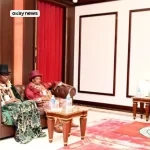
This commitment was made on Wednesday, December 17, 2025, when the European Union Ambassador to Nigeria and the Economic Community of West African States, Gautier Mignot, paid a courtesy visit to Nigeria’s Chief of Defence Staff, Olufemi Oluyede, at the Defence Headquarters in Abuja, Nigeria’s federal capital.
While congratulating General Oluyede on his recent appointment as Nigeria’s highest-ranking military officer, Ambassador Mignot reiterated the European Union’s continued support for Nigeria as it confronts multiple security threats across different regions of the country. He described Nigeria as a strategically important partner for Europe, noting that 19 of the 27 member states of the European Union currently maintain diplomatic missions in Nigeria, reflecting the depth of existing ties.
Ambassador Mignot further explained that European Union support for Nigeria goes beyond traditional military assistance. According to him, several European Union-funded non-kinetic projects are already being implemented across Nigeria, focusing on peacebuilding, stability, conflict prevention, governance reforms, political processes, and institutional development.
He said, “The European Union’s support for Nigeria extends beyond military assistance, covering governance, political processes, and institutional development, particularly at a time that is complex and demanding.” Okay News reports that these initiatives are designed to complement Nigeria’s internal efforts to address insecurity while promoting long-term stability.
The Ambassador also assured the Nigerian military leadership of the European Union’s readiness to deepen cooperation in areas that would enhance security and support sustainable peace nationwide.
In his response, General Oluyede expressed appreciation for the European Union’s longstanding support and said he was familiar with the various programmes and interventions implemented by the bloc in Nigeria over the years. He welcomed the European Union’s plan to engage Nigeria directly on security matters rather than limiting its military involvement mainly to the Multinational Joint Task Force, a regional security coalition operating in the Lake Chad Basin.
The Chief of Defence Staff called for the fast-tracking of proposed areas of engagement, stressing that Nigeria is currently facing multifaceted security challenges across different regions. He noted that timely and enhanced support from the European Union would be crucial in enabling the Nigerian Armed Forces and other security agencies to respond effectively.