Nigeria’s electoral umpire, the Independent National Electoral Commission, has formally intervened in the deepening leadership crisis rocking the Peoples Democratic Party, one of Nigeria’s major opposition political parties, by summoning rival factions for an emergency reconciliation meeting in Abuja, Nigeria’s federal capital.
The intervention followed weeks of internal tension within the party, which has raised concerns about its unity, administrative control, and preparedness ahead of future national elections in Africa’s most populous country. The closed door meeting is taking place at the headquarters of the electoral body, the institution constitutionally empowered to regulate political parties and conduct elections in Nigeria.
Okay News reports that the session brought together two opposing camps laying claim to the party’s leadership structure. One faction is led by Tanimu Turaki, a senior Nigerian lawyer and politician, while the other is backed by Nyesom Wike, the former Governor of Rivers State in southern Nigeria, and is represented by Abdulrahman Mohammed.
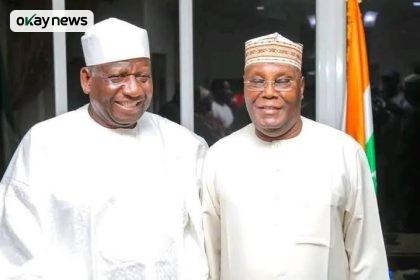
Sources familiar with the meeting disclosed that Turaki arrived with several members of his National Working Committee, officials from the party’s national secretariat, as well as Babangida Aliyu, a former Governor of Niger State, located in north central Nigeria. The presence of high profile party figures underlined the seriousness of the internal standoff.
On the other side, Mohammed was accompanied by members of his national caretaker committee, including the committee’s secretary, Senator Sam Anyanwu, a Nigerian lawmaker and former Governor of Imo State in southeastern Nigeria.
Although officials of the electoral commission declined to speak on record while discussions were ongoing, insiders said the meeting was aimed at clarifying leadership legitimacy, restoring internal order, and preventing the dispute from undermining the party’s constitutional obligations.
Political analysts note that the crisis reflects wider struggles within Nigeria’s opposition politics, particularly as parties position themselves for upcoming electoral cycles. Observers are closely watching whether the intervention by the commission will produce a binding resolution acceptable to all factions.
More details are expected to emerge as the meeting progresses.