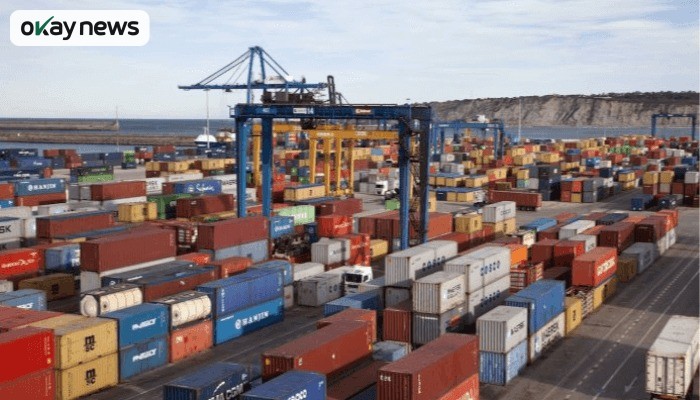
Importers and stakeholders in Nigeria’s maritime sector report massive financial losses due to persistent container blockages at Lagos ports. The disruptions stem from post-clearance detentions by the Maritime Police Command.
Okay News reports that over 1,500 containers worth billions of naira face monthly blockages. Stakeholders accuse police officers of using vessel manifests to detain already cleared cargo.
Container blockage involves delaying or restricting movement after arrival and clearance. It prevents delivery, triggering demurrage, storage charges, and contract defaults.
The concerns emerged during a stakeholders’ engagement organised by the Nigerian Shippers’ Council (NSC) in Lagos, Nigeria’s commercial hub. Participants included freight forwarders, truck owners, terminal operators, and importers.
General Manager of Port and Terminal Multiservices Limited, Babatunde Keshiro, criticised parallel authority exercises. He referenced a 2022 Executive Order prohibiting interceptions of cleared containers.
“Whatever concerns or reservations they observe on these cargoes should be raised during the examination. Once the cargo has been cleared and exited the ports, there shouldn’t be any ploy to delay it,” Keshiro stated.
Apapa Chapter Chairman of the Association of Nigerian Licensed Customs Agents, Emeka Chukwumalu, demanded police liability for demurrage on blocked containers.
PTML Chapter Chairman Abayomi Duyile alleged shipping companies illegally share manifests with police. This contradicts international standards.
Truck owners and freight associations highlighted operational disruptions. Inefficiencies burden port users and erode global confidence.
NSC Executive Secretary Pius Akutah clarified the council’s role in cargo protection. He noted interventions resolve many complaints promptly.
Complaints Unit Head Bashir Ambi denied fee collection allegations. He urged evidence-based petitions for redress.
Maritime Police spokesperson Adebayo Rasheed defended blockages as intelligence-driven. He cited recent arms and tramadol seizures in cleared containers.
Rasheed insisted security cannot be compromised for trade. Affected parties should petition with extortion evidence.
“Blocking of containers by the Police cannot be stopped,” he stated.
This impasse underscores coordination challenges among agencies. It impacts Nigeria’s port efficiency and trade competitiveness.
Stakeholders call for stricter adherence to clearance protocols. They seek to eliminate duplicative interventions harming legitimate commerce.