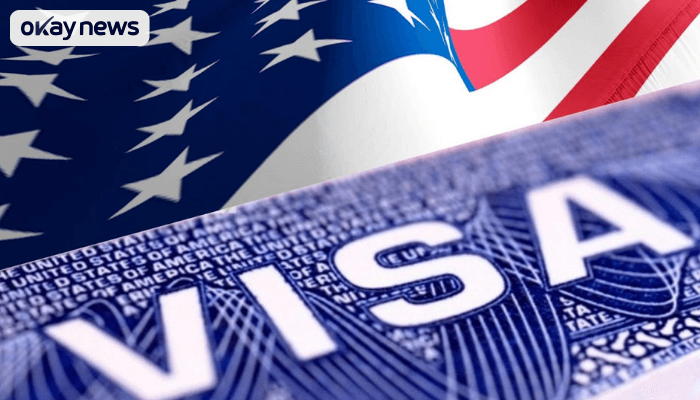
The United States has introduced a stringent new visa policy, requiring applicants from Nigeria and 37 other countries to post financial bonds ranging from $5,000 to $15,000 for B1/B2 business and tourism visas, effective from various dates in January 2026.
Okay News reports that the measure, announced by the US State Department, targets nationals from nations deemed high-risk due to overstay rates, screening challenges, or security concerns, further tightening entry requirements for travellers.
For Nigerians, the bond requirement begins on January 21, 2026, with amounts determined during the visa interview based on individual risk assessments.
Applicants must submit Department of Homeland Security Form I-352 and pay via the Treasury’s Pay.gov platform, providing a guarantee against visa overstays.
The policy states that bonds are non-refundable if paid without consular direction and do not guarantee visa approval.
Refunds occur only upon confirmed timely departure, unused visa expiration, or denied entry at a US port.
Bonded visa holders must enter through designated airports: Boston Logan International, John F. Kennedy in New York, or Washington Dulles in Virginia.
Nigeria’s inclusion cites a 5.56 per cent B1/B2 overstay rate, 11.90 per cent for student and exchange visas, and vetting difficulties linked to terrorist groups like Boko Haram operating in parts of the country.
Of the 38 affected nations, 24 are African, including Algeria, Angola, Benin, Botswana, Burundi, Cabo Verde, Côte d’Ivoire, Djibouti, Gabon, The Gambia, Guinea, Guinea-Bissau, Mauritania, Senegal, Tanzania, Togo, Uganda, Zambia, and Zimbabwe.
Other countries span Asia, Latin America, the Caribbean, and Oceania, such as Bangladesh, Bhutan, Cuba, Kyrgyzstan, Nepal, Tajikistan, Turkmenistan, Venezuela, Fiji, Tonga, Tuvalu, and Vanuatu.
Implementation dates vary, with some starting January 1 and others January 21, 2026.
The directive expands a prior pilot program, reflecting broader US efforts to enforce immigration compliance amid global concerns.
Critics argue the high bonds—equivalent to millions of naira for Nigerians—could severely restrict legitimate travel for business, tourism, education, medical treatment, and family visits.
Supporters view it as a necessary deterrent against overstays and unauthorised stays.
The policy follows partial travel suspensions on Nigeria and others announced in December 2025.
Applicants are advised to consult Travel.State.Gov for detailed guidelines and prepare financially if applying from affected countries.