The Federal Government has proposed spending N6.04 billion on personnel costs for workers of the Ajaokuta Steel Company Limited in the 2026 budget, despite the steel plant remaining non-operational and producing no steel for more than four decades since its conception.
Okay News reports that details from the 2026 Appropriation Bill show Ajaokuta was allocated a total of N6.69 billion for the year, with personnel expenses alone accounting for about 90.4 per cent of the entire budget.
The personnel provision covers N4.79 billion for salaries and wages, N1.25 billion for allowances and social contributions, including N479.42 million for employer pension contributions, N239.71 million for NHIS, and N59.82 million for employees’ compensation insurance.
Regular allowances were budgeted at N468.9 million, further highlighting the focus on staff remuneration rather than production revival.
Overhead costs were limited to N233.63 million, while capital expenditure stood at just N410.8 million, underscoring the minimal resources directed toward rehabilitating or completing the long-abandoned steel complex.
A year-on-year comparison reveals that personnel spending remains consistently high, showing only marginal adjustments rather than any structural shift toward operational revival.
In the 2025 budget, the government earmarked N6.21 billion for salaries at Ajaokuta, up from N4.29 billion in 2024, marking a 44.76 per cent increase despite zero output.
The 2026 figure of N6.04 billion is slightly lower than 2025 but still confirms that the core budget priority is staff salaries rather than steel production.
Recurrent expenditure for 2026 totals N6.28 billion, compared with capital spending of N410.8 million, meaning less than seven per cent of the allocation is devoted to assets, rehabilitation, or infrastructure.
The capital budget includes N56.4 million for fixed asset purchases such as computers, printers, and security equipment, N129.2 million for construction and provision of facilities, and N225.2 million for rehabilitation and repairs, largely focused on electricity-related works and office buildings.
These provisions fall far short of the massive investment required to revive a heavy industrial complex originally designed to anchor Nigeria’s steel and manufacturing value chain.
Budget documents also indicate that Ajaokuta will generate zero independent revenue and receive no grants, leaving the company fully dependent on federal allocations.
Despite its inactive status, the company continues to feature in constituency-style capital projects, including solar street lighting in parts of Niger East and Kwara North, water facilities, road repairs, security lighting, and grants to market women and youths.
These projects, while ongoing, remain unrelated to steel production or industrial output.
However, the 2026 budget makes a separate provision for the revitalisation of Ajaokuta Steel Company Limited and the National Iron Ore Mining Company under the Federal Ministry of Steel Development.
Budget documents show N150.99 million allocated for the revitalisation programme of ASCL and NIOMCO, classified as an ongoing project within the ministry’s capital expenditure.
Additionally, N1.06 billion was allocated for project preparation aimed at investment mobilisation for Ajaokuta Steel Company Limited, covering feasibility studies, Environmental and Social Impact Assessment, and financial modelling.
This preparatory spending is lower than the N2.41 billion budgeted for investment mobilisation in 2025 and N250.98 million for revitalisation in the same year.
Conceived in 1979 as Nigeria’s flagship industrial project, the Ajaokuta Integrated Steel Complex was designed to drive upstream and downstream industrial development, reduce steel imports, and support economic diversification.
More than 40 years later, budgetary allocations show it functions largely as a payroll institution, with successive governments funding salaries while production remains at zero.
The company claims on its website to employ about 3,000 people, with projections that full commissioning would directly employ 10,000 staff in the first phase and support over 500,000 jobs in upstream and downstream industries nationwide.
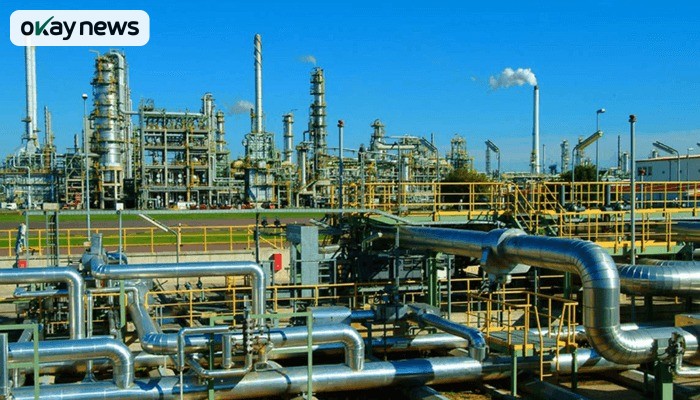
The plant features four distinct rolling mills: the Billet Mill, Light Section Mill, Wire Rod Mill, and Medium Section and Structural Mill, utilising blast furnace technology, which accounts for about 70 per cent of global liquid steel production.
By 1994, the plant was estimated to be 98 per cent complete in terms of equipment installation, with 40 out of 43 planned units constructed.
However, due to mismanagement and funding issues, the project remains incomplete over 45 years later.
Efforts to revive Ajaokuta have included a 2019 Russia-Africa Summit agreement with Russian support and funding from Afreximbank and the Russian Export Centre, delayed by the COVID-19 pandemic and later abandoned.
In January 2024, President Bola Tinubu initiated discussions with Chinese steel company Luan Steel Holding Group, but no concrete results have emerged.
At a recent investigative hearing, Senator Natasha Akpoti-Uduaghan representing Kogi Central questioned the Sole Administrator Summaila Akaba about workers collecting salaries from the N4.2 billion appropriated for personnel costs in the 2024 budget.
She noted that unscheduled visits revealed only about 10 people present, questioning who was receiving the funds.
The National Assembly increased the 2024 budgetary allocation from N4.45 billion proposed to N5.18 billion approved, adding N730 million for unrelated community projects outside Kogi State.
In 2024, Minister of Steel Development Shuaibu Audu stated that the government was at an advanced stage of raising over N35 billion required to restart the Light Mill Section.
Expert evaluations indicated between $2 billion and $5 billion would be needed to fully revive the complex within three years.
The Federal Government also signed a Memorandum of Understanding with a Russian consortium including Tyazhpromexport, Novostal M, and Proforce Manufacturing Limited for rehabilitation, completion, and operation of Ajaokuta and the National Iron Ore Mining Company.
Despite these efforts, experts have repeatedly insisted that privatisation remains the most effective option to maximise the plant’s potential.
The persistent payroll-heavy allocations for a non-operational facility continue to raise questions about fiscal priorities and the long-term strategy for reviving Nigeria’s flagship steel industry.