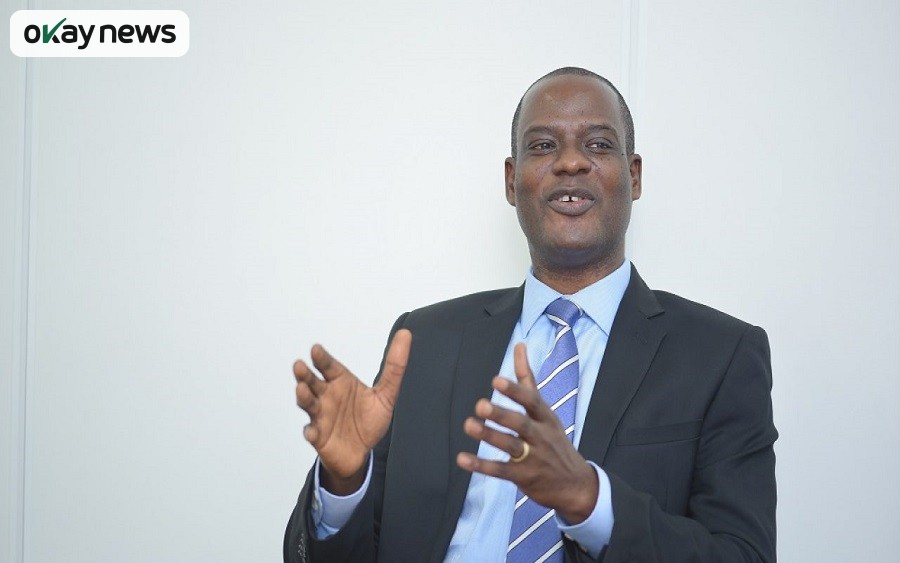
The Chairman of Nigeria’s Presidential Committee on Fiscal Policy and Tax Reforms, Taiwo Oyedele, has publicly dismissed reports suggesting that the Federal Government of Nigeria has suspended the release of implementation guidelines for the country’s newly enacted tax laws due to alleged uncertainty surrounding their final content.
Okay News reports that the clarification followed a media publication which alleged that the Nigerian government had halted further action on the guidelines, citing remarks attributed to Oyedele that suggested ambiguity over the final version of the tax laws passed by Nigeria’s National Assembly, the country’s federal legislature.
According to the report being disputed, Oyedele was quoted as directing the Nigeria Revenue Service and the Joint Revenue Board to delay action on implementation guidelines until clarity emerged on the definitive version of the legislation. The report claimed these remarks were made in Lagos, Nigeria’s commercial capital, on Tuesday, during a question-and-answer session after he delivered a keynote address.
The event in question was the 2026 Economic Outlook programme organised by the Institute of Chartered Accountants of Nigeria, a leading professional accounting body in Africa’s most populous country. The event was themed “ICAN@60: Accountability As The Bedrock For National Development” and formed part of activities marking the institute’s sixtieth anniversary.
During the forum, Oyedele acknowledged that multiple versions of the tax laws were circulating, raising legitimate concerns about authenticity. He explained that this development led him to direct his team to obtain an officially printed copy from the Government Printer, as required under Nigeria’s Acts Authentication Act.
“The Acts Authentication Act says whatever the Government Printer publishes is the evidence of the law that was passed,” Oyedele said, stressing the importance of relying on legally authenticated documents for policy implementation.
He further explained that while an initial version of the tax laws released by the Government Printer was regarded as official by the executive arm of government, members of Nigeria’s National Assembly later disputed that version. According to him, lawmakers argued that the document did not fully reflect the provisions approved by the legislature.
Oyedele disclosed that the National Assembly subsequently carried out its own internal review and produced separate gazetted versions of the laws, which were circulated electronically. However, he said efforts to obtain a printed copy directly from the Government Printer were unsuccessful.
According to Oyedele, officials at the Government Printer informed his team that all printed copies had already been taken by the National Assembly and that no further copies would be released to the public until lawmakers concluded their review process.
Despite these explanations, Oyedele firmly rejected claims that the Federal Government had suspended the issuance of implementation guidelines. On Thursday, January 15, 2026, he reacted via his verified account on X, the social media platform formerly known as Twitter, where he shared a screenshot of the report’s headline and clearly labelled it “Fake News.”
His response has added clarity to ongoing public discussions around Nigeria’s tax reform process, which remains a central component of the Federal Government’s broader economic restructuring agenda.