The Senior Staff Association of Nigerian Polytechnics (SSANIP), a labour union representing senior non-academic employees in Nigeria’s polytechnic system, has rejected a revised scheme of service drafted for federal and state polytechnics by the National Board for Technical Education (NBTE), the government agency that regulates technical and vocational institutions in Nigeria.
The union said its position was presented at a recent stakeholders’ meeting in Abuja, Nigeria’s federal capital, where the NBTE’s reviewed scheme was discussed with education-sector leaders and other participants.
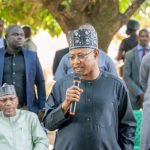
In a statement released on Thursday, 22 January 2026, the National President of SSANIP, Philip Ogunsipe, said the association’s objections were formally captured in a minority report submitted to Nigeria’s Minister of Education, Doctor Moruf Alausa.
Okay News reports that SSANIP’s central complaint is that the revised framework introduces what it describes as an unequal structure between teaching and non-teaching workers from the point of entry into service, a situation the union said could deepen workplace divisions inside polytechnics.
According to SSANIP, the proposed scheme would also restrict career progression for non-teaching personnel by blocking officers who hold first degrees from rising to the Consolidated Tertiary Institutions Salary Structure (CONTEDISS) Level 15, which it said is equivalent to Nigeria’s public service Grade Level 17.
Ogunsipe said, “Documentary evidence from the National Salaries, Income and Wages Commission, which confirmed the existence of the CONTEDISS 15 salary structure, as well as similar documents from the Office of the Head of the Civil Service of the Federation, were outrightly ignored at the meeting despite their relevance to the issue.”
Beyond the pay and progression debate, the union also faulted a remark attributed to the Chairman of the Committee of Heads of Polytechnics and Colleges of Technology of Nigeria, an umbrella body of polytechnic leadership, who reportedly said that “rectors and a section of non-teaching staff could not retire on the same grade levels.”
SSANIP described the reported comment as demeaning, elitist, discriminatory, and inconsistent with Nigeria’s public service rules, arguing that retirement outcomes should reflect approved structures and regulations rather than institutional preferences.
The association said its submission of the minority report amounted to a formal breakdown of confidence in the NBTE’s handling of the issue, stating that it had “passed a vote of no confidence in the ability of the NBTE to provide a fair, balanced and acceptable scheme of service for polytechnics in Nigeria”, citing what it described as “persistent bias and disregard for extant public service regulations.”
In its appeal to the education ministry, SSANIP urged Minister Alausa to review the protest letter objectively, saying a balanced decision is needed to protect equity, maintain industrial harmony across polytechnics, and ensure strict compliance with established public service standards.
Ogunsipe also expressed confidence in the minister’s capacity to resolve the dispute, describing him as a dispassionate public servant, while insisting that addressing SSANIP’s concerns would prevent polytechnic employees from being treated differently from workers in Nigeria’s universities and colleges of education.
The union further opposed a decision taken at the stakeholders’ meeting to remove the Office of the Head of the Civil Service of the Federation, Nigeria’s top civil service management office, from the preparation and approval process for schemes of service.
SSANIP said it “rejected the decision taken at the stakeholders’ meeting to remove the Office of the Head of the Civil Service of the Federation from the preparation and approval of the schemes of service”, stressing that it would “not support such a move, which it described as counterproductive.”