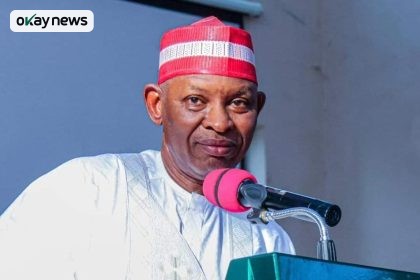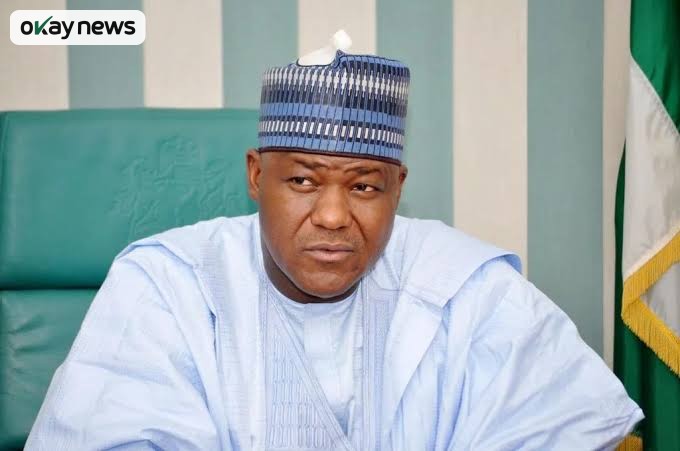
Former Speaker of the House of Representatives in Nigeria, Yakubu Dogara, has said President Bola Ahmed Tinubu, the leader of Africa’s most populous country, still enjoys strong backing even as debates continue over who should lead Nigeria in 2027.
Dogara spoke on Channels Television’s Sunday Politics programme in Abuja, Nigeria’s capital, on Sunday, 25 January 2026, where he praised some actions of the Tinubu administration and also urged leaders to keep the country inclusive and united.
He said arguments that a rotational presidency could weaken competence were not convincing, insisting that every part of Nigeria has capable people.
“There is hardly any area of human endeavour where you cannot find someone from the North who is competent or someone from the South who is competent. So I think we can jettison that argument,” he said.
Dogara also spoke about the Forum of Former Members of the Legislature, a group he said was created to bring together former lawmakers across different levels of government. Okay News reports that he explained the forum includes former senators and members of the House of Representatives, as well as former members of state assemblies and councillors from all 774 local government areas in Nigeria.
According to him, the idea is to use the experience and skills former legislators gained through public service to defend democratic values at a time when democracy is facing pressure in many parts of the world.
“We feel we have a responsibility, especially now that democratic values all over the world are under threat, to come together, unite behind the ideals that brought us into politics, and speak with one voice,” he said.
On the issue of rotational presidency, a long-running debate in Nigeria about balancing power between the mainly northern and southern regions, Dogara said fairness must apply to everyone and should reduce fear and suspicion.
“Justice to the North must be justice to the South,” he said, adding that once Nigerians accept that principle, “it becomes easier to modify and qualify this arrangement so there is no room for mistrust.”
Dogara pointed to developments in the North-East, a region that has faced years of insecurity, as an area where he believes Tinubu’s government is making progress. He said he recently visited the Mandara Plateau area and referenced a road project linking Gembu to Yumguni near the border with Cameroon, a neighbouring Central African country.
He said the road is meant to open up a difficult terrain and improve movement for local communities. Recalling the long wait for such infrastructure, he said it was a promise that had remained unfulfilled for decades since the 1961 plebiscite that settled parts of the region’s political status.
“This was a region dominated by treacherous terrain. It used to take six hours from Gembu to the headquarters of Sardauna Local Government and to the Cameroonian border. When the road is completed, the journey will take about 45 minutes. That is leadership,” he said.
He also described what he called a change in travel patterns in the North-East, linking it to growing public confidence in security improvements.
Dogara said that during the Christmas period, he travelled to Bauchi, a state in north-eastern Nigeria, to receive the President during a condolence visit and then returned to Abuja by road. He said the trip took almost nine hours even with security escorts clearing the way, but he was struck by the volume of movement into the region.
He described Jos, the capital of Plateau State in north-central Nigeria, as a key gateway to the North-East and said the traffic suggested many people were beginning to believe conditions were improving.
“It means people are beginning to have faith in improvements in security. People who had fled are now returning during holidays,” he said.
While declaring support for Tinubu, Dogara insisted Nigeria remains a democracy where differing views must be allowed.
“We have not stopped anyone from expressing contrary views. Nigeria is a democracy. We have stated our position and our reasons. We are open to listening to others, and they may even convince us to change our minds,” he said.
He also addressed concerns sometimes raised about Christians in parts of Northern Nigeria, saying the situation differs by state. He cited Plateau, Benue, Taraba and Nasarawa as examples where, in his view, Christian voices are not being pushed aside, and said cooperation between Christians and Muslims remains important for solving shared problems.
Dogara also reacted to speculation that he could emerge as Tinubu’s running mate in the 2027 election under the All Progressives Congress (APC), the ruling party in Nigeria. He played down the talk, saying decisions should be based on what is right, not fear.
“Honestly, I would have pleaded with you to leave me out of that. Whatever we do should not be because we are afraid of anybody. It should be because it is the right thing to do,” he said.
He stressed the need for unity across religion and region, recalling his own emergence as Speaker as an example of political cooperation.
“I want to see my emergence as Speaker replayed again and again, where Muslims defend Christians and Christians defend Muslims. That unity is what we need to rebuild the North and Nigeria,” he said.
On claims by opposition voices that the APC might not be able to win a truly competitive election, Dogara dismissed the argument as “vitriol and bluster,” saying what matters is whether opponents can present credible alternatives and build winning coalitions.