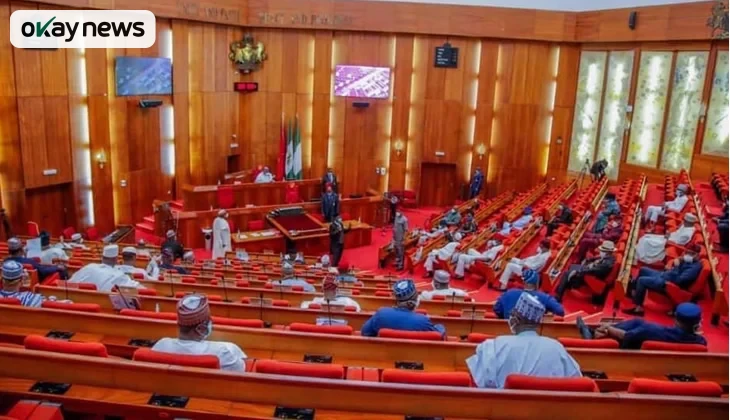
Nigeria’s Senate, the upper chamber of the National Assembly in Abuja, Nigeria’s capital, has started steps to amend the country’s 1999 Constitution in a bid to raise the Federal Government (FG) share of money distributed from the Federation Account, a central pool of national revenue shared by the three tiers of government.
The move was introduced on Tuesday, 3 February 2026, amid renewed arguments over fiscal federalism, a long-running debate about how much financial power and resources should sit with Nigeria’s federal authorities versus state and local governments.
Under Nigeria’s current revenue sharing formula, the Federal Government receives 52.68 per cent of funds from the Federation Account, the 36 state governments receive 26.72 per cent, and the 774 local government councils share 20.60 per cent.
Despite the Federal Government already taking the largest portion, the new proposal argues that the existing arrangement no longer matches the size of national responsibilities handled by federal authorities, including major infrastructure and security duties across Africa’s most populous country.
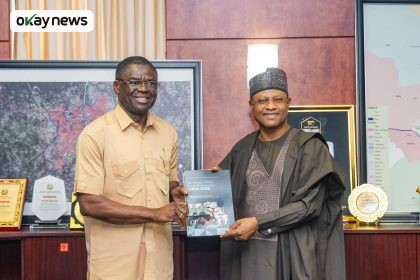
Okay News reports that the bill is sponsored by Senator Sunday Karimi, a lawmaker from Kogi West Senatorial District in Kogi State, north-central Nigeria, and a member of the All Progressives Congress (APC), Nigeria’s ruling party.
The proposed constitutional amendment passed its first reading during plenary in the Senate, which is the formal stage where a bill is introduced and read for the first time before further debate and possible committee review.
In explaining the purpose of the bill, Karimi said the current structure is putting rising pressure on the Federal Government as it tries to respond to national challenges. “The current revenue sharing formula is outdated and unsustainable because it places excessive financial pressure on the federal government amid rising infrastructure decay and insecurity nationwide,” he said.
He argued that funding limitations have continued to affect the upkeep of federal roads and broader security efforts, including the fight against banditry and terrorism, which have remained serious concerns in several parts of Nigeria.
The Senate’s effort to adjust the sharing formula is also unfolding at a time when labour unions, civil society groups, and opposition figures have criticised rising allocations to states, claiming that increased funding has not always produced clear improvements in public welfare.