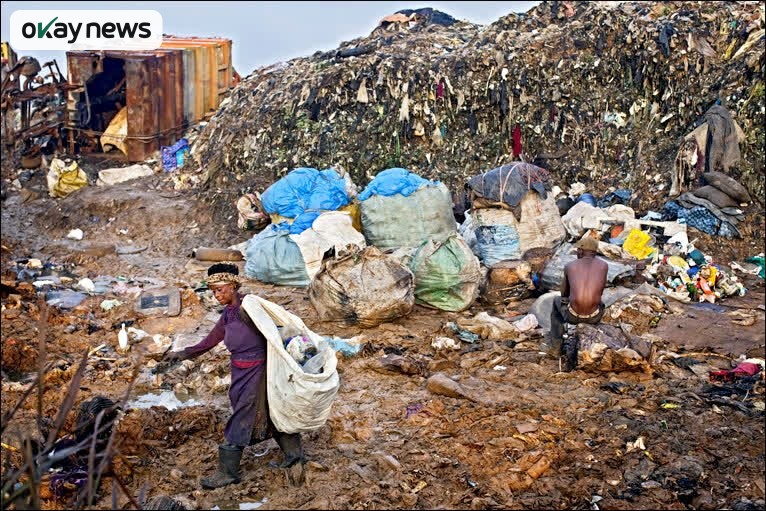
Abuja, Nigeria – Nigeria generates 32 million tonnes of solid waste yearly, but only 20 percent is properly managed, environmental engineers have warned.
Okay News reports that experts issued the warning at the 15th inauguration of the Nigerian Institution of Environmental Engineers in Abuja. They stressed that environmental neglect now threatens public health, economic growth, and national development.
Outgoing chairman Engr. Nureni Adegboyega described the event as a renewed commitment to sustainable solutions. Speaking for the Nigerian Society of Engineers president, Engr. Babagana Mohammed said sustainability now covers infrastructure, water security, waste systems, and climate adaptation. These factors form the foundation of national prosperity, he added.
Past president Engr. Kashima Ali explained that environmental engineers design water systems, control pollution, manage hazardous waste, and prevent diseases through improved sanitation. They also enforce regulations to prevent ecological damage.
New chairman Engr. Caius Umekesiobi warned that Nigeria faces interconnected crises including flooding, poor waste management, weak recycling, pollution, and ecosystem loss. “These challenges threaten our development goals and future generations,” he said. He urged engineers to lead Nigeria’s sustainability efforts.
Poor waste management carries heavy economic costs. Uncollected waste blocks drainage and causes flooding. Contaminated water raises healthcare expenses. Recyclable materials worth billions end up in landfills instead of creating value.
The Minister of Water Resources, Prof. Joseph Utsev, attended alongside academics and engineering leaders. They called for stronger government-engineer collaboration on science-based solutions.
What happens next depends on investment in recycling systems, renewable energy, and climate-resilient infrastructure. Engineers say stronger enforcement and scientific planning will determine whether Nigeria secures a sustainable future.