The Nigerian Supreme Council for Islamic Affairs (NSCIA) has asked Muslims across Nigeria, a country in West Africa, to look out for the Ramadan crescent immediately after sunset on Tuesday, February 17, 2026, in Nigeria’s West African Time (WAT, GMT+1).
The NSCIA said the sighting will correspond with 29 Sha’aban 1447 Anno Hegirae (A.H.), the day traditionally used to confirm whether the fasting month will begin the following day. Ramadan is the ninth month of the Islamic lunar calendar, and many Muslim communities rely on verified moon sightings to determine its start.
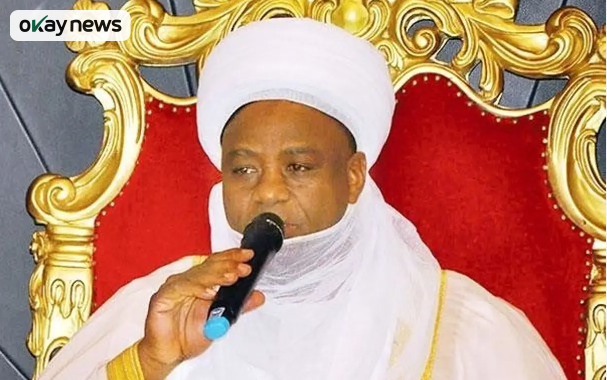
Nigeria’s Sultan of Sokoto, Alhaji Muhammad Sa’ad Abubakar, who serves as President General of the NSCIA and is widely regarded as Nigeria’s leading Islamic figure, made the announcement through a statement issued on Sunday, February 15, 2026. The statement was signed by the NSCIA Secretary General, Professor Is haq Oloyede.
The council said the National Moon Sighting Committee (NMSC), working with Nigeria’s National Space Research and Development Agency (NASRDA), has put monitoring arrangements in place to support credible reporting from across the country. Okay News reports that if the crescent is confirmed on Tuesday evening, the Sultan is expected to announce Wednesday, February 18, 2026, as the first day of Ramadan 1447 A.H. If it is not confirmed, Thursday, February 19, 2026, would become the first day of Ramadan.
The NSCIA also directed those who record credible sightings to follow official channels, saying: “Details of the traditional rulers, religious leaders and members of the NMSC who should be contacted on the credible sighting of the crescent of Ramadan are available at www.nscla.com.ng”� it read.
Beyond the moon sighting guidance, the council said it was concerned about what it described as a rise in Islamophobic narratives in Nigeria over the past year. It claimed some public discussions have tried to portray Muslims unfairly in ways it said do not reflect the broader insecurity challenges in the country.
In the statement, the NSCIA alleged there were double standards in how incidents involving people of different faiths are reported and debated. It said: “Muslims are being asked to denounce what they did not endorse, while those who have been victims of attacks are being framed as aggressors.” The council also referenced insecurity linked to armed groups, including Boko Haram, and claimed Muslims have suffered both direct violence and what it described as negative narratives that downplay Muslim losses.
The NSCIA further said it had received complaints after the Independent National Electoral Commission (INEC), Nigeria’s election management body, announced that presidential elections would hold during Ramadan, while gubernatorial elections could fall on a likely Eid al Fitr day, the festival that marks the end of Ramadan. The council said it was watching the situation and hoped there would be an immediate review.
The statement urged Muslims to remain calm and committed to virtues during Ramadan despite challenges, and it prayed for peace, protection, and tranquillity across Nigeria. It also prayed for the opportunity for Muslims to witness and complete Ramadan 1447 A.H. in good health and devotion.