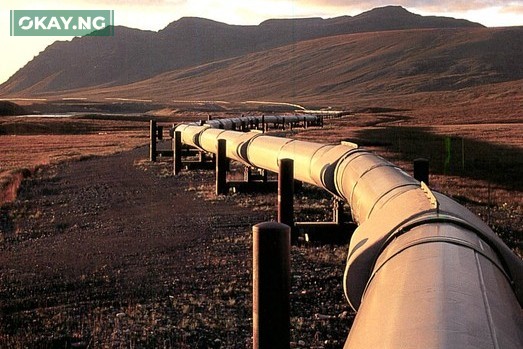
Nigeria, Algeria, and Niger have signed crucial agreements to advance the long-awaited Trans-Saharan Gas Pipeline (TSGP) project, a move that could reshape Africa’s energy landscape and significantly impact global gas markets. This ambitious undertaking aims to transport vast reserves of Nigerian natural gas across the Sahara Desert, reaching European markets through Algeria.
The signing ceremony, held in Algiers, Algeria, on Tuesday, marks a significant step forward for a project that has faced numerous hurdles since its initial conception in the 1970s. “These agreements include a contract for updating the project’s feasibility study, a compensation agreement, and a non-disclosure agreement (NDA) among the energy companies from the three nations,” confirmed Dada , Special Assistant on Social Media to President Bola Tinubu.
The TSGP, spanning over 2,565 miles, is envisioned as a cornerstone of African energy infrastructure, connecting Nigeria’s abundant gas reserves to European consumers. This strategic initiative holds immense potential for all three nations, offering economic growth opportunities, energy security, and a strengthened position in the global energy market.
For Nigeria, a nation blessed with vast gas reserves yet grappling with infrastructure limitations, the TSGP presents a lifeline. However, the country has largely untapped this potential, leaving a significant portion of its reserves stranded. The TSGP offers a pathway to unlock this wealth, diversify export markets, and generate substantial revenue.
Also Read: Portugal Ditches Russian Gas, Eyes U.S. and Nigerian LNG
The recent energy crisis in Europe, triggered by the disruption of Russian gas supplies, has underscored the urgency of diversifying energy sources. European nations, scrambling to secure alternative gas supplies, have turned to countries like the United States for Liquefied Natural Gas (LNG). While Nigeria exports LNG to Europe, its current share of the market remains relatively small. The TSGP presents a unique opportunity for Nigeria to capitalise on the growing demand for natural gas in Europe, increasing its market share and solidifying its position as a key energy supplier.
However, the path ahead is not without challenges. The project requires substantial investment, with an estimated $13 billion needed for construction and associated infrastructure. Furthermore, the immense logistical and technical hurdles of constructing a pipeline across the vast and challenging terrain of the Sahara Desert cannot be underestimated.
Despite these challenges, the renewed momentum behind the TSGP project offers a beacon of hope for Africa. This initiative has the potential to not only transform the energy landscape of the continent but also to position Africa as a major player in the global energy market. As the world grapples with the challenges of climate change and the need for sustainable energy solutions, the TSGP project could serve as a model for how African nations can harness their natural resources to drive economic growth and contribute to global energy security.