


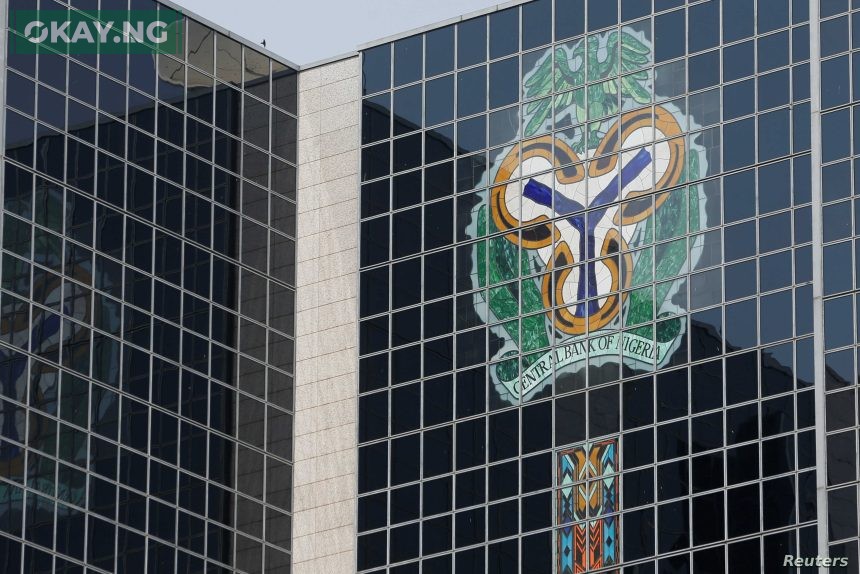
The Central Bank of Nigeria (CBN), Nigeria’s monetary authority and financial system regulator, injected more than N1.7 trillion into the banking sector during the first week of February 2026 through maturing Open Market Operations (OMO) bills and primary market instruments.
Okay News reports that the inflows, analyzed from CBN data covering February 2 to 6, occurred amid the bank’s tight monetary policy to combat inflation and stabilize the foreign exchange market in Nigeria.
The largest injection was N1.03 trillion from OMO bill maturities on February 3. Primary market repayments added N668.87 billion on February 5 and N24.38 billion earlier, totaling over N1.72 trillion.
Instead of issuing new OMO bills, the CBN used Nigerian Treasury Bill auctions across 91-day, 182-day, and 364-day tenors to absorb excess liquidity.
Despite the inflows, liquidity remained tight. Banks placed surplus funds with the CBN, with Standing Deposit Facility (SDF) balances reaching N2.65 trillion on February 5 before dropping to N2.49 trillion on February 6.
Opening balances for banks and discount houses ranged from N85.59 billion to N163.8 billion, indicating subdued risk appetite and limited interbank lending.
This reflects high interest rates and uncertainty, pressuring funding costs and constraining credit growth.
For fixed-income investors, elevated yields on government securities are expected to continue, sustaining demand for treasury bills and bonds.
The CBN’s actions balance liquidity relief with tightening to prioritize price stability.
In January 2026, the CBN sterilized over N15 trillion via OMO and treasury bill issuances, pushing interbank rates higher.
Analysts project N8.61 trillion in February inflows from maturities and coupons, but tight conditions are likely to persist as the CBN focuses on inflation control and forex stability.


, Nigeria's monetary authority and financial system regulator, injected more than N1.7 trillion into the banking sector during the first week of February 2026 through maturing Open Market Operations (OMO) bills and primary market instruments.)