


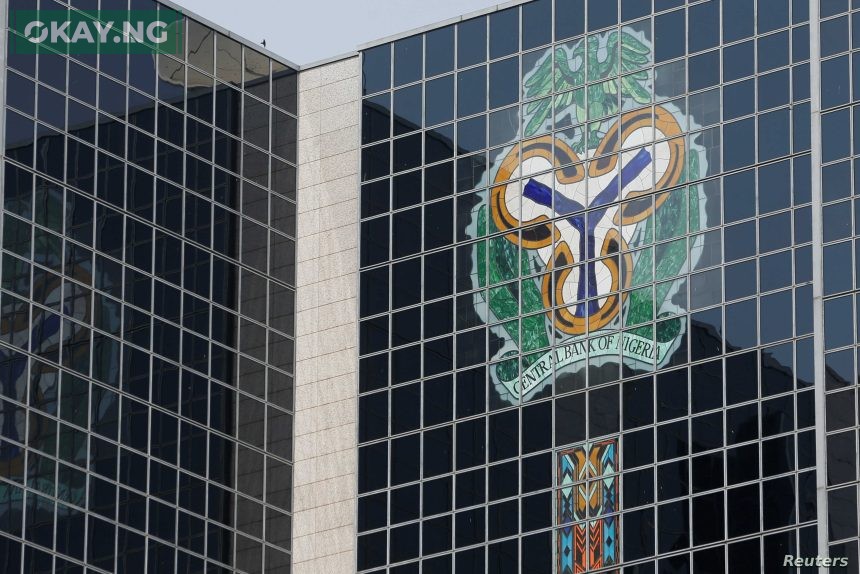
Lagos, Nigeria – The Central Bank of Nigeria (CBN) sterilised over N3.57 trillion within three days as deposit money banks parked surplus cash in the Standing Deposit Facility, a window where banks warehouse excess funds for an overnight interest rate of about 22.8 percent.
Okay News reports that analysis of CBN financial data between Tuesday, February 17 and Thursday, February 19, highlights the scale of liquidity management operations undertaken by the apex bank amid sustained high system balances and strong demand for government securities. The aggressive liquidity mop-up followed banking system liquidity of over N4 trillion, which analysts at Coronation Research noted in their Nigeria Weekly Update released on Friday, February 13.
System liquidity strengthened midweek, closing at N4.32 trillion on Friday, while SDF placements rose sharply from N2.52 trillion at the start of the week to N4.26 trillion. The CBN recorded net liquidity absorption of about N435 billion on February 17 after OMO sales of N2.30 trillion were offset by N1.87 trillion in maturities. On February 19, the CBN booked treasury bills and bond sales totalling N1.91 trillion against N765.89 billion in repayments, resulting in net absorption of approximately N1.14 trillion. Banks maintained nearly N3 trillion in daily SDF placements, including N3.35 trillion on February 17 and about N2.97 trillion on February 19, despite ongoing mop-up operations.
Analysts say elevated liquidity reflects structural and fiscal dynamics rather than immediate funding stress, as Standing Lending Facility usage remained minimal. Olubunmi Ayokunle, Head of Financial Institutions Ratings at Augusto and Co, attributed the liquidity build-up to historically high FAAC allocations, lingering effects of Ways and Means financing from the immediate past administration, and gradual economic recovery, noting that funds disbursed for projects often re-enter the banking system.
The CBN’s multi-trillion-naira sterilisation drive comes at a significant fiscal cost as the apex bank intensifies efforts to contain inflation and prevent surplus liquidity from undermining tightening objectives. In 2024 alone, liquidity management expenses reportedly surged to about N3 trillion due to aggressive OMO and market operations. The CBN has absorbed nearly N2.87 trillion through primary market instruments in 2025 amid elevated debt issuance. Persistent high-yield issuances have reinforced banks’ preference for risk-free instruments over private sector credit expansion.


 sterilised over N3.57 trillion within three days as deposit money banks parked surplus cash in the Standing Deposit Facility, a window where banks warehouse excess funds for an overnight interest rate of about 22.8 percent.)