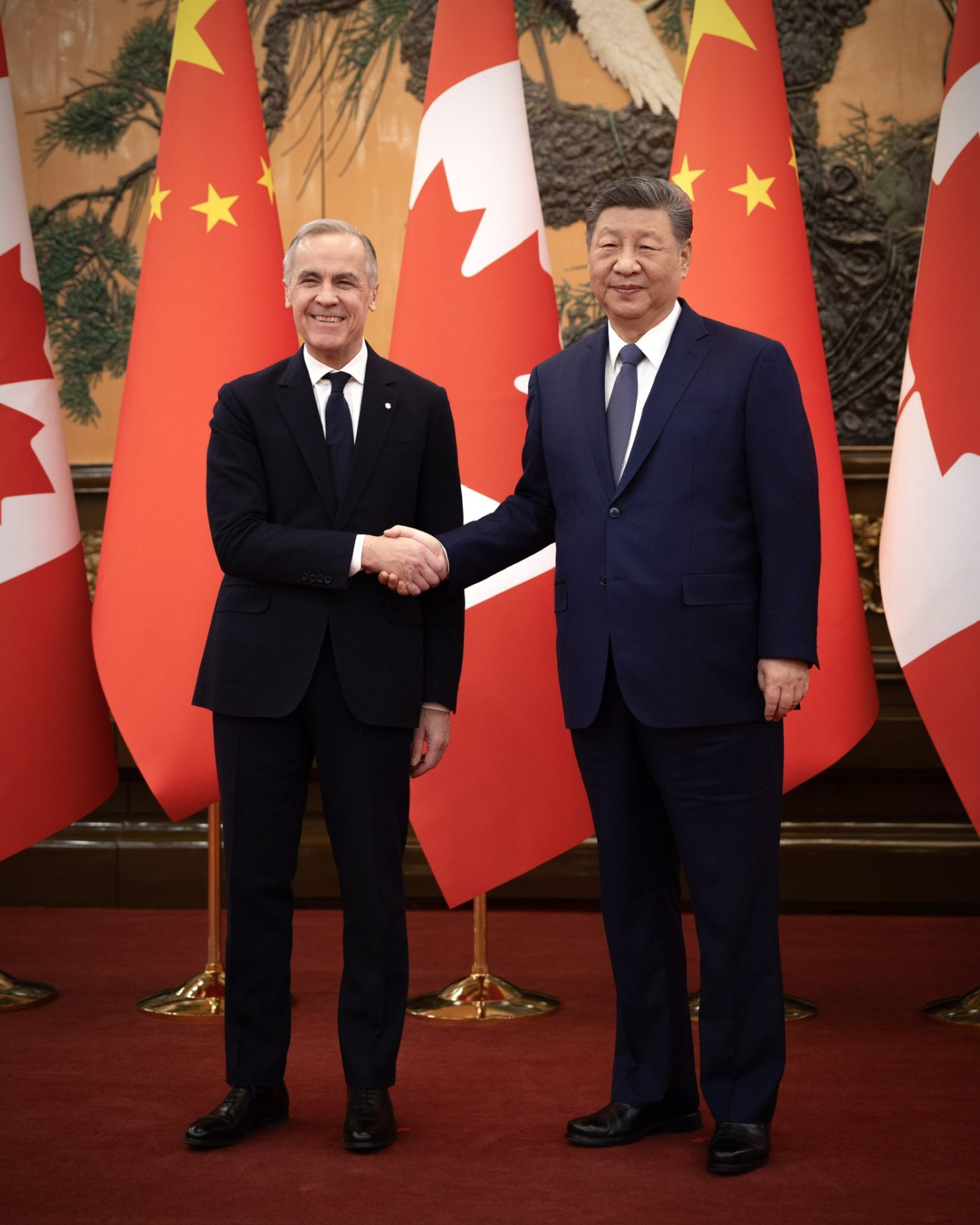
Chinese President Xi Jinping and Canadian Prime Minister Mark Carney have announced a sweeping relief package on tariffs. The breakthrough occurred during a high-stakes meeting in Beijing on Friday, marking the first visit by a Canadian leader to the Chinese capital in nearly a decade and signaling a pragmatic “reset” of bilateral relations.
Under the new agreement, China will drastically reduce its levies on Canadian canola oil from a staggering 85% to 15% by March 1. In exchange, Canada has agreed to revise its taxation on Chinese electric vehicles, shifting to a “most-favoured-nation” rate of 6.1%, a sharp departure from the 100% punitive tariffs previously imposed in alignment with U.S. policy.
Okay News reports that the meeting, held in the Great Hall of the People, follows a period of intense global trade disruption characterized by erratic tariff policies from Washington. Analysts suggest that Carney’s diplomatic outreach is part of a broader strategy to diversify the Canadian economy and reduce its heavy reliance on the United States, especially as the multilateral trade system faces increasing erosion.
While the summit emphasized economic cooperation, Prime Minister Carney maintained a firm stance on non-negotiable “red lines,” including concerns over human rights, foreign interference, and the situation in Taiwan. He described the discussions as “realistic and respectful,” noting that while the two nations operate under different systems, direct engagement is essential to building a more predictable and independent Canadian economy.
The reset is expected to open the door for increased Chinese investment in Canada’s energy and technology sectors, particularly in electric vehicle battery production. As other world leaders, including the German Chancellor and the UK Prime Minister, prepare for similar visits to Beijing, the Canada-China deal is being viewed as a potential template for nations seeking stability amidst shifting global alliances.