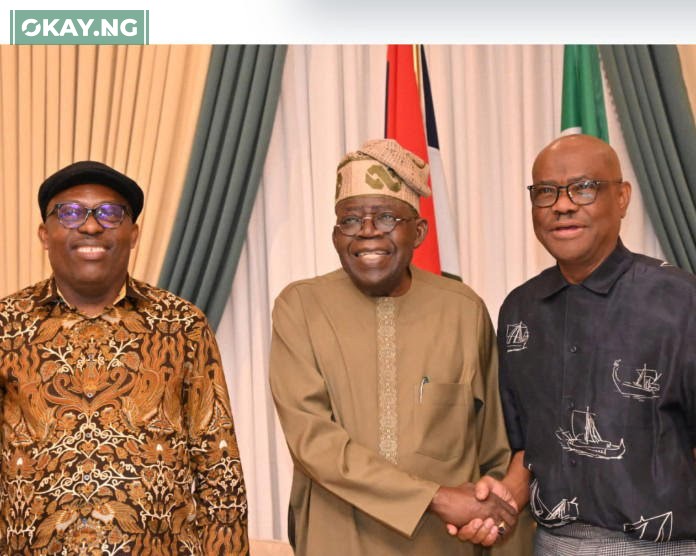
The long-running political feud between FCT Minister Nyesom Wike and Rivers State Governor Siminalayi Fubara has taken Nigeria through one of its most dramatic constitutional tests in years.
The Crisis:
Early 2025 saw Rivers State descend into turmoil as Wike’s loyalists in the House of Assembly moved against Governor Fubara. Tensions boiled over into violence and pipeline vandalism that threatened oil revenues.
Federal Intervention:
On March 18, 2025, President Bola Tinubu declared a six-month state of emergency in Rivers, suspended the governor, deputy, and lawmakers, and appointed a sole administrator to stabilize the state and protect critical oil infrastructure.
Latest Update:
On September 17, 2025, Tinubu announced the end of the emergency rule. Fubara and the House of Assembly have been restored to office. The president urged reconciliation and stability going forward.
Why It Matters:
Rivers is an oil powerhouse. Political paralysis here doesn’t just affect local governance — it shakes Nigeria’s entire economy, fuels investor anxiety, and leaves communities vulnerable.
History Lesson:
Nigeria has used emergency powers before — Plateau (2004), Ekiti (2006), and the North-East under Boko Haram. But suspending a sitting governor remains constitutionally controversial.
okaynews.com report:
According to okaynews.com, both Wike and Fubara escalated tensions with public accusations. Wike warned Fubara was surrounded by “wrong advisers,” while Fubara’s camp accused Wike of undermining state institutions.
The Way Forward:
Analysts stress that Rivers needs reconciliation, security-plus-development for oil communities, and accountable governance. Both Wike and Fubara are advised to shift from personal battles to building institutions that serve citizens.
Bottom line: The state of emergency may have ended, but the real test is whether Rivers leaders can put people above politics. Nigeria’s oil economy — and Rivers’ peace — depend on it.