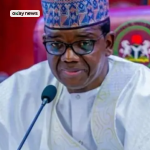
A former member of the Osun State House of Assembly in South West Nigeria, Mr. Olatunbosun Oyintiloye, has expressed concern over what he described as growing misinformation surrounding the newly introduced tax laws by the Federal Government of Nigeria. He urged relevant public enlightenment institutions to move swiftly to correct misconceptions before they become entrenched in public discourse.
The former state lawmaker, who previously represented the Obokun State Constituency in Osun State, is a senior figure of the All Progressives Congress, the ruling political party at the federal level. He gave the warning in Osogbo, the capital of Osun State in South West Nigeria, during a public statement issued on Sunday.
According to him, inaccurate information and speculative commentary have overshadowed what he claimed to be the central goals of the tax reforms. These goals, he argued, include broadening revenue generation and reducing economic pressures on low-income earners.
Mr. Oyintiloye stated that, “The misinformation about the tax law is spreading faster than the true intentions of the law and its benefits. Till this moment, many Nigerians, both literate and illiterate, do not actually know what to believe about the tax law.”
He attributed the situation to insufficient public sensitisation ahead of implementation, saying the delay allowed unverified claims to dominate social conversations, broadcast discussions, and online political debates.
Okay News reports that the Federal Government of Nigeria recently commenced the implementation of updated tax provisions under broader economic reforms championed by President Bola Ahmed Tinubu. The reforms form part of federal measures aimed at reducing the fiscal deficit, improving economic stability, and increasing revenue to support public services.
However, Mr. Oyintiloye insisted that communication gaps were partly responsible for public suspicion, especially among low-income households who fear potential financial strain. He said, “Lack of proper understanding of the new tax laws has led to misconceptions, misrepresentation and suspicion of the government’s intentions. There is a need for massive and sustained enlightenment on the new law.”
He called for an immediate nationwide media campaign, urging the National Orientation Agency (NOA) and the Federal Ministry of Information and National Orientation to intensify public education about the reforms. He said these agencies possess both statutory responsibility and the nationwide reach needed to calm fears and ensure accurate interpretation of policy.
Mr. Oyintiloye added, “I want to implore the National Orientation Agency, the Federal Ministry of Information and other relevant government agencies to step up their public awareness campaigns, especially on the tax reform law. This is important to enable Nigerians to better understand the good intentions of the government, particularly towards low-income earners, and to curb the spread of misinformation.”
He also referenced wider economic reforms of the current administration, including foreign exchange adjustments, subsidy rationalisation, and investment-related fiscal changes, arguing that they were beginning to produce positive macroeconomic signals. He stressed that these gains must be “properly packaged and communicated to the Nigerian public” to avoid misinterpretation.
Despite allegations circulating online about doctored legislative content and unverified claims of excessive taxation, the Federal Government of Nigeria remains committed to the rollout, maintaining that the law supports fiscal responsibility, investor confidence, and economic recovery.