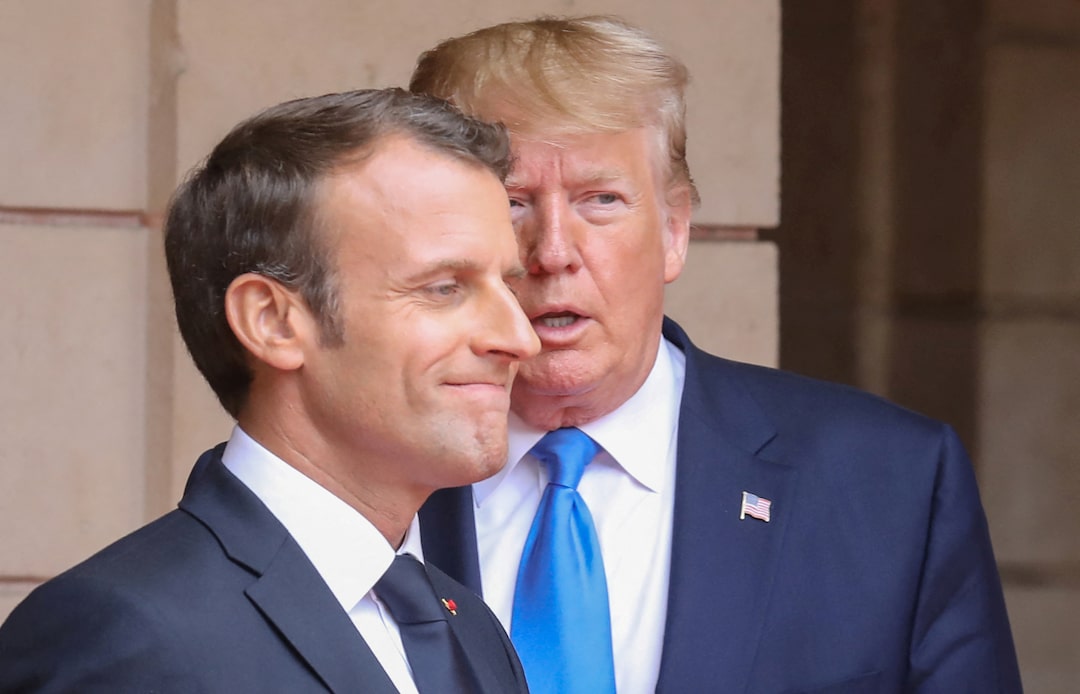
Tensions between the United States and France have escalated sharply after President Donald Trump issued a severe economic ultimatum to French President Emmanuel Macron. In a move designed to secure French participation in a new US-led global initiative, the American leader has threatened to impose a staggering 200 percent tariff on French wines and champagnes if Macron refuses to join the “Board of Peace.”
Okay News reports that this aggressive diplomatic maneuver is part of a broader strategy by the Trump administration to compel international leaders to support the new body, which aims to address the conflict in Gaza and other global flashpoints. Sources close to the French presidency have indicated that Macron intends to decline the invitation, a decision that appears to have provoked the hefty tariff threat from the White House.
The verbal exchange has turned personal, with President Trump dismissing Macron’s political standing. When asked about the French President’s potential refusal, Trump disparaged his counterpart, suggesting that “nobody wants him” and predicting he would be out of office shortly. To further pressure the French leader, Trump also released private correspondence from Macron in which the latter expressed confusion over US actions regarding Greenland.
The economic stakes of this dispute are incredibly high for the European nation. The United States remains the single largest export market for French spirits and wines, with trade valued at approximately €3.8 billion in 2024 alone. The immediate impact of the threat was felt in the stock market, where shares of luxury giant LVMH—parent company of Moët & Chandon—dipped by 2 percent in early trading as investors reacted to the uncertainty.
Industry analysts warn that such volatility could freeze investment within the sector. Experts suggest that beverage companies may be forced to hoard cash and halt expansion plans to weather the potential storm. Meanwhile, French agricultural officials have reacted with outrage. Farm Minister Annie Genevard described the threat as “brutal” and a tool of “blackmail,” urging the European Union to stand firm and utilize its anti-coercion instruments to prevent further escalation.
The “Board of Peace” initiative itself has drawn skepticism from the international community. Draft documents suggest that the US is requesting a contribution of $1 billion from member nations to secure their seat for more than three years. As European leaders weigh their response, the focus now shifts to whether the EU will implement a collective counter-strategy to protect its member states from what they view as hostile trade practices.