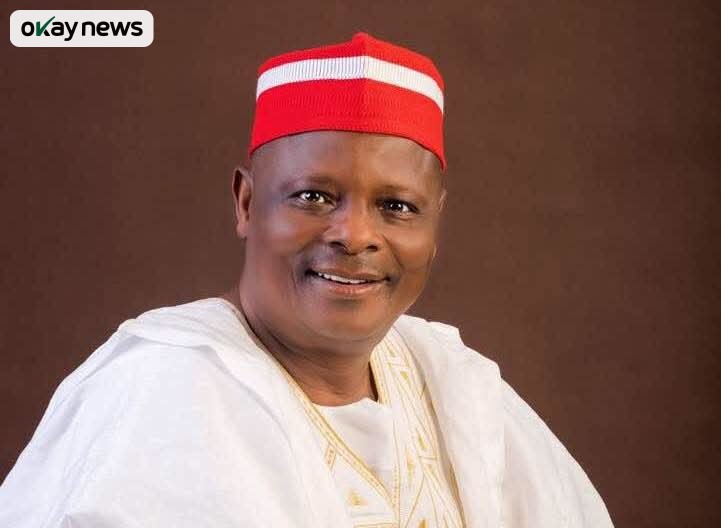
The Kwankwasiyya Movement, a political movement in Nigeria linked to Senator Rabiu Musa Kwankwaso, has rejected claims that a proposed bill in the United States Congress connects its leader to “severe religious freedom violations.”
In a statement issued on Wednesday night, Wednesday, February 11, 2026, the Movement’s spokesperson, Habibu Sale Mohammed, said the group was “with grave concern” about reports surrounding the Nigeria Religious Freedom and Accountability Act 2026 (HR 7457), which it said allegedly mentions Kwankwaso in relation to religious freedom issues.
Okay News reports that the Movement described the allegation as false and said it does not match Kwankwaso’s public record. “We state unequivocally that these allegations are unfounded, misleading, and inconsistent with the verifiable public record of Senator Kwankwaso’s life and service,” Mohammed said.
The group said Kwankwaso, a former Governor of Kano State in northern Nigeria and a national political figure, has held senior offices over more than three decades, including Deputy Speaker of Nigeria’s House of Representatives, two-term governor, Minister of Defence, senator, and presidential candidate. It said he has not been indicted or prosecuted for religious persecution, extremism, or human rights violations.
A key part of the Movement’s response focused on Nigeria’s constitutional structure and the history of Sharia-based legal systems in parts of northern Nigeria. It argued that the expansion of Sharia-based legal frameworks was not limited to Kano State and was not the work of a single person, adding that similar systems were adopted by multiple states through legislative processes and remain subject to constitutional oversight and appeal.
The Movement said the matter is important because it touches on Nigeria’s sovereignty and how foreign lawmakers assess local legal systems. It argued that the United States maintains relations with countries whose legal systems include Islamic jurisprudence, and it said Nigeria’s legal pluralism should not be treated differently without clear, individual evidence against a named individual.
Mohammed also said Kwankwaso’s record is against violence and extremism, and he claimed that, while governor, Kwankwaso took steps to curb extremist threats and protect residents across religious lines. The statement said he engaged Christian leaders and minority communities and promoted peaceful coexistence. It also pointed to the 2023 Nigerian presidential election, in which Kwankwaso ran on the ticket of the New Nigeria Peoples Party, saying his running mate, Bishop Isaac Idahosa, reflected a message of inclusion.
The Movement called on the United States Congress to reject any recommendation that links Kwankwaso to religious freedom violations and to remove his name from the bill. It also suggested that the inclusion of his name may have been influenced by personal or political disputes, saying: “We believe that the inclusion of Senator Kwankwaso’s name was influenced by certain individuals who are on a mission to settle personal scores with him or by political rivals, or both, and the Congress should not allow its respected chamber to be used for this.”
The statement added that allegations of this scale should be supported by clear facts rather than assumptions, and it described Kwankwaso as a nationalist and statesman committed to unity and inclusive governance.
Separately, on Wednesday, February 11, 2026, the New Nigeria Peoples Party, the political party that nominated Kwankwaso for president in 2023, said it was shocked by the same proposed legislation and the idea of targeted sanctions linked to alleged religious freedom violations in Nigeria.