
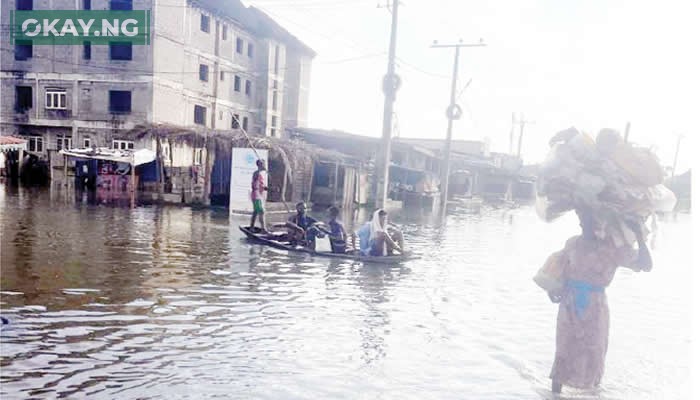
The devastating flood crisis across Nigeria has left at least 232 people dead and more than 121,000 residents displaced, according to new figures released by the National Emergency Management Agency (NEMA).
The official statistics, updated as of September 20, reveal that widespread flooding has ravaged multiple states, destroying homes, farmlands, and public infrastructure. In total, 339,658 Nigerians have suffered varying degrees of loss, while 681 sustained injuries linked to the disaster.
Heavy Casualties Across States
The latest data show that Niger State recorded the highest death toll with 163 fatalities. Adamawa State followed with 59 deaths, while Taraba registered five, Yobe two, and Borno, Gombe, and Jigawa each reported one death. At least 115 people remain missing nationwide.
Beyond fatalities, the floods destroyed 42,301 houses and wiped out 48,447 hectares of farmland, threatening food security and livelihoods across rural communities.
Hardest-Hit States
Some of the most severely affected states include:
Lagos: 57,951 people affected, 3,680 displaced, and 3,244 homes destroyed.
Adamawa: 57,890 impacted, 23,077 displaced, 59 killed, 438 injured, and over 9,000 hectares of farmland lost.
Akwa Ibom: 46,233 affected, 40,140 displaced, with over 17,000 homes and farms submerged.
Imo: 29,242 affected, 15,607 displaced, 81 injured, and hundreds of houses destroyed.
Taraba: 26,722 affected, 3,080 displaced, 88 injured, and five deaths.
Rivers: 22,345 affected, 9,645 displaced.
Other states such as Delta, Abia, Edo, Kaduna, Bayelsa, Cross River, Yobe, Sokoto, and Ondo also reported heavy impacts ranging from deaths to mass displacements and farmland losses.
Relief Challenges
NEMA has highlighted urgent humanitarian needs such as food, temporary shelters, health services, and access to clean water. However, relief efforts face severe obstacles. The agency noted that resource shortages account for 68% of challenges, while inaccessibility of flooded areas (17%), security risks (6%), and community resistance (7%) further hamper operations.
Gombe and Sokoto in Distress
In Gombe State, the State Emergency Management Agency (SEMA) confirmed that 15 lives had been lost and nearly 1,000 households displaced. Executive Secretary Haruna Abdullahi said,
“The situation is worrying. From the beginning of this rainy season till date, we have recorded 15 deaths, and close to 1,000 households have been displaced across different communities.”
In Sokoto State, torrential rains earlier this month destroyed over 2,200 houses in 61 communities within Rabah Local Government Area, leaving more than 5,300 households displaced.
Kano and Bauchi Struggle with Recovery
Kano State also reported widespread devastation, with homes unroofed by storms. Alhaji Isyaku Kubarachi, Executive Secretary of the Kano State Emergency Management Agency, stated that officials are still compiling full damage figures.
In Bauchi State, officials disclosed that the government had spent over ₦500 million to help residents rebuild homes damaged by the floods.
Kaduna and Nasarawa Interventions
Kaduna State faced extensive damage, with over 970 residents displaced after heavy rains in Zaria and Kaduna metropolis. The government has since shut down a flood camp in Tudun Wada following improvements in water levels. Governor Uba Sani reassured residents:
“We will continue working with partners to build a more resilient Kaduna State and ensure our communities are better protected against environmental hazards.”
Similarly, the Nasarawa State Emergency Management Agency (NASEMA) urged residents in flood-prone areas to relocate to safer grounds, while Jigawa authorities credited early interventions for avoiding mass displacement.
Call for Collective Action
Emergency officials across Nigeria continue to urge residents to comply with safety directives. In Niger State, Abdullahi Baba-Arah, Director-General of the Niger State Emergency Management Agency, warned communities to avoid blocking drainages and to relocate from riverine areas during heavy downpours.
He emphasized that the government alone cannot tackle the flood crisis:
“We also warn people not to block drainage ways with refuse in their residences and ensure that they play their own roles while the government also plays its role because the government cannot do it all alone.”
The 2025 floods highlight the urgent need for sustainable flood management systems, stronger disaster preparedness, and improved community awareness.
okaynews.com reports that while some states like Zamfara escaped major flooding this year, most regions remain at risk, reinforcing calls for stronger early-warning systems and climate resilience planning.