
OSLO, Norway — The Federal Government has successfully built one of the largest digital education data systems in Africa, integrating over 32 million learners across 204,048 schools to permanently eliminate guesswork from national educational planning.
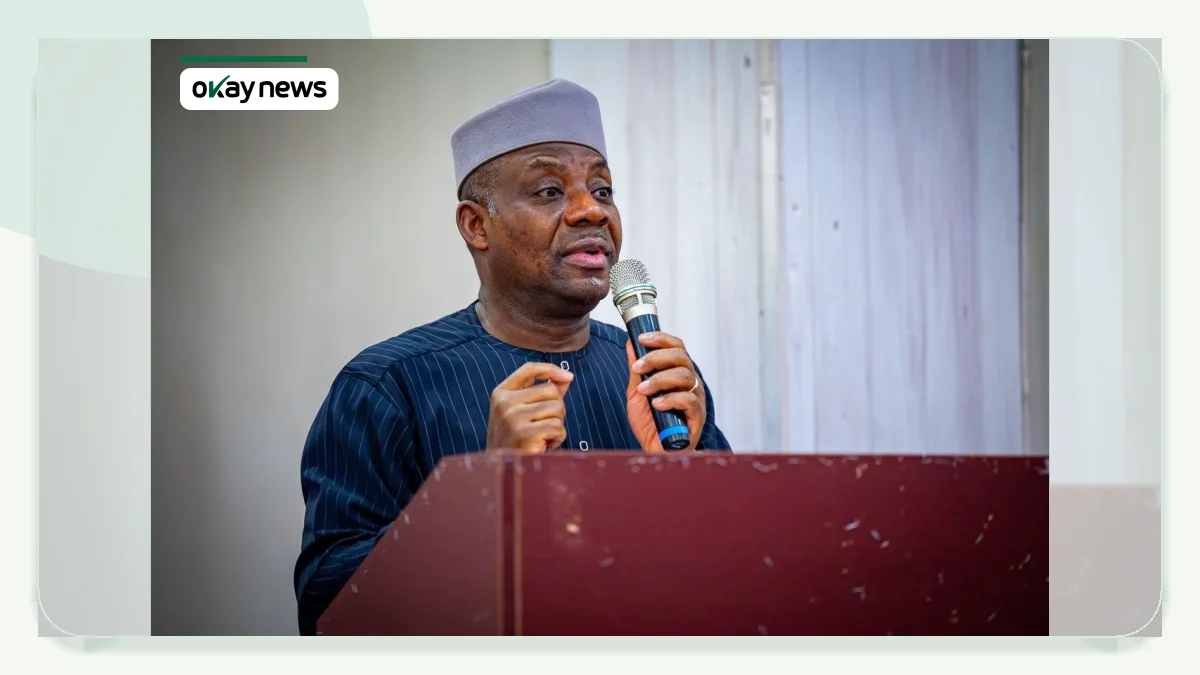
The global milestone was officially unveiled by the Honourable Minister of Education, Professor Tunji Alausa, during his keynote address on Tuesday, June 16, 2026, at the DHIS2 Annual Conference in Oslo, Norway.
Okay News reports that the groundbreaking platform, named the Digital National Education Management Information System (DNEMIS), was developed in strategic collaboration with UNICEF. Designed to drive absolute fiscal transparency and precision infrastructure deployment, the system tracks real-time school metrics across all 36 states, the Federal Capital Territory (FCT), and the 774 Local Government Areas of the federation.
With this deployment, Nigeria now accounts for an astonishing 32 million of the 45 million education records hosted globally on the DHIS2 platform, making it the largest singular education implementation on the network anywhere in the world. The development follows a major push for institutional data audits across sub-nationals, matching recent directives by state executives to implement rigorous school censuses and security vetting controls within regional schools.
Addressing international development partners, tech experts, and global policymakers in Oslo, Professor Alausa emphasized that sustainable educational reform relies entirely on verifiable measurement. “You cannot improve what you cannot measure,” the Minister asserted. “The future of education is not guesswork. It is data, evidence, and action.”
The Minister explained that under the ongoing Nigeria Education Sector Renewal Initiative (NESRI)—which aligns directly with President Bola Ahmed Tinubu’s Renewed Hope Agenda—the federal government is actively using the platform to map out structural deficits. By analyzing the massive data pool, the ministry can identify exact geographical areas where new classrooms, qualified teachers, modern learning materials, and targeted security interventions are needed most, ensuring public funds are channeled directly to underserved communities.