
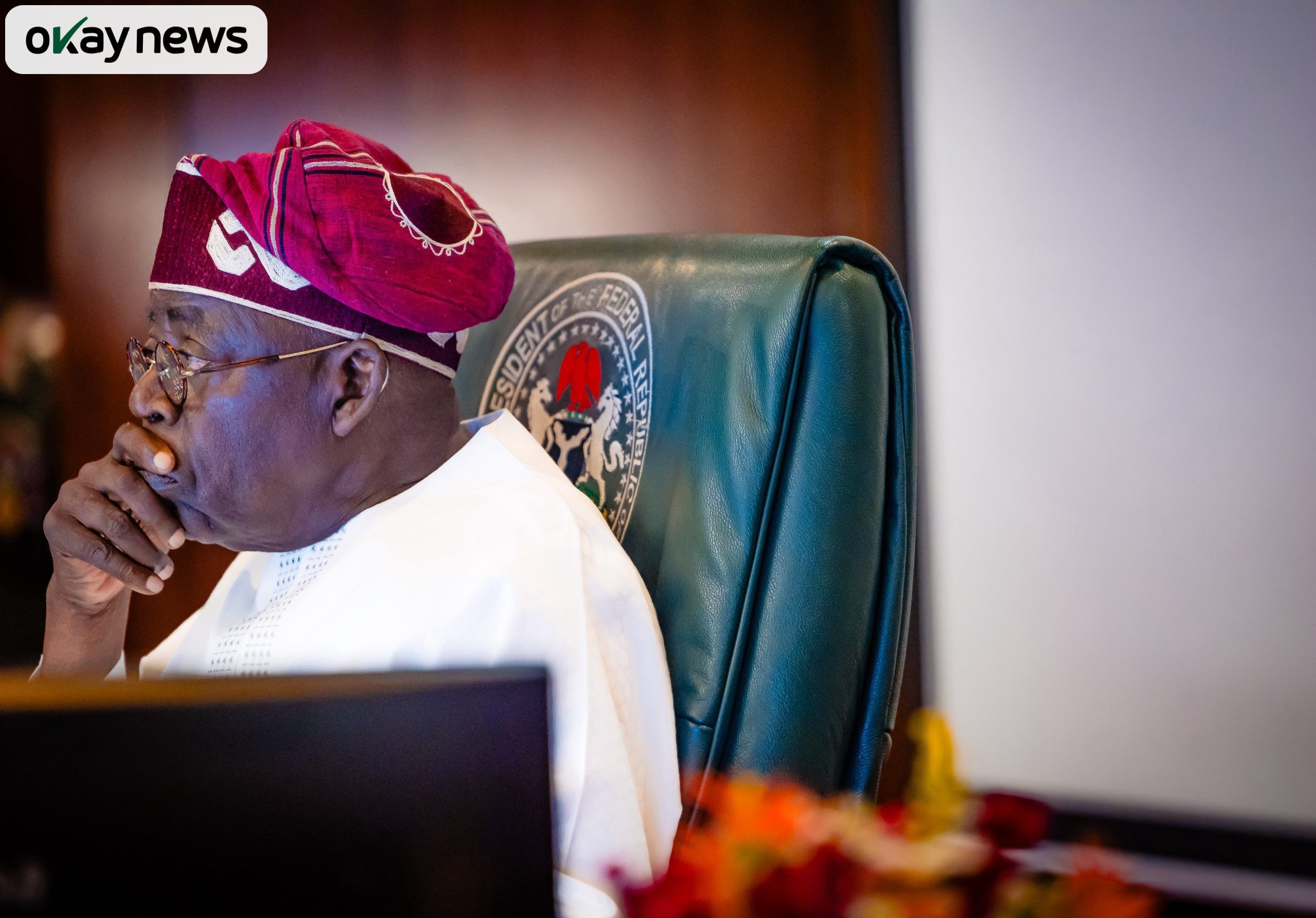
ABUJA, Nigeria. The President of Nigeria, Bola Tinubu, held a closed security meeting with the Nigerian Chief of Defence Staff, General Olufemi Oluyede, and a French military general in the capital city of Abuja on Monday, April 13, 2026.
The afternoon meeting at the Presidential Villa occurred as the West African nation faces a sharp rise in violent attacks. Okay News reports that the discussion followed a recent agreement between President Tinubu and the President of France, Emmanuel Macron, to supply the Nigerian armed forces with military equipment and specialized training.
A source at the presidency confirmed the gathering to journalists. “The President met the Chief of Defence Staff and a French General. That is the meeting that happened this afternoon.” Addressing the ongoing strategy, the source added, “He is on top of the security issues. That is why he met with the French General and our CDS today.”
The push for international support comes immediately after insurgents killed a commanding officer and six soldiers in Borno State, located in northeastern Nigeria. Late on Sunday, April 12, 2026, troops encountered an explosive device in the town of Monguno. A military spokesperson explained the incident, noting the commander died while assessing the situation. “Regrettably, the Commanding Officer, while courageously proceeding to the troops’ location to personally assess the situation, encountered an improvised explosive device which severely affected his vehicle, leading to his death alongside six other gallant personnel.”
Adding to the national crisis, the Nigerian Air Force is facing intense scrutiny over an airstrike that killed over 40 people at the Jilli market near the border of Yobe State and Borno State on Saturday, April 11, 2026. The government insists the location was a terrorist logistics base used by the Islamic State West Africa Province (ISWAP) and Boko Haram. Temitope Ajayi, a presidential spokesperson, defended the military action. “The market was a legitimate military target because it has been turned into a logistics and trading hub by Boko Haram and ISWAP terrorists.”
However, civilian survivors currently hospitalized in the city of Maiduguri maintain they were ordinary traders. Abu Goni, a survivor, recounted the attack which happened around 6:00 in the evening West African Time (GMT+1). “I went to the market with my horse. All of a sudden, a jet appeared, and I didn’t even know what was going on; no one there paid attention to the jet. We were in the market after Maghrib prayers around 6 pm when the strike began. After the strike, some died, some survived, but I thank God, I am alive.’’
Meanwhile, violence also escalated in the central region of the country over the weekend. Between Friday, April 10, 2026, and Sunday, April 12, 2026, suspected armed herders attacked multiple communities in Benue State, killing at least 14 people, including a mobile police officer.
Adam Ochega, a Local Government Area chairman in the region, detailed the casualties in a message to journalists. “Nine people were killed, many were injured at Edikwu-Ankpali, while one was killed at Ikobi and another was killed at Adija.” Maxwell Ogiri, another local official, confirmed the death of the police officer during a gun battle. “It was in the process of repelling the invaders that he was shot during a gun duel. He was one of the security men drafted to the area to beef up security.”
The compounding security failures recently prompted the United States Department of State to authorize the voluntary departure of its non emergency employees from the embassy in Abuja. The United States also elevated 23 Nigerian states to its highest travel risk category. The federal government of Nigeria dismissed concerns of a widespread collapse. “While we acknowledge isolated security challenges in some areas, there is no general breakdown of law and order, and the vast majority of the country remains stable,” stated Mohammed Idris, the Minister of Information.