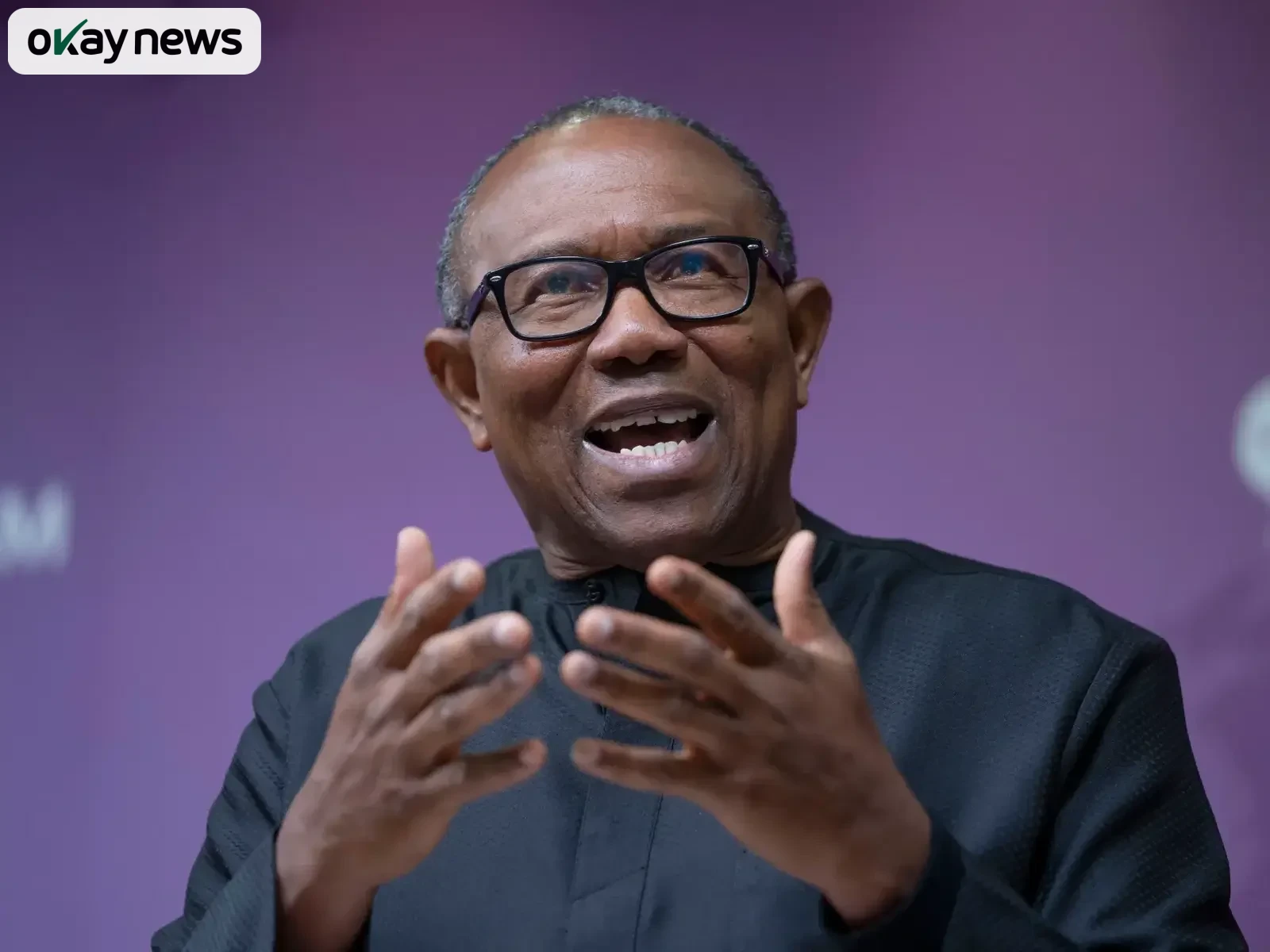
Nigeria’s former presidential candidate of the Labour Party and former Governor of Anambra State, Peter Obi, has sharply criticised Nigeria’s House of Representatives for declining to criminalise vote buying during political party primaries, describing the decision as a dangerous setback to the country’s democratic future.
Obi made his concerns public in a statement shared on X, formerly known as Twitter, on Sunday, December 21, 2025, as Nigeria’s federal lawmakers continued deliberations on amendments to the Electoral Act, 2022, a law governing the conduct of elections in Africa’s most populous country.
According to Obi, many Nigerians had expected the House of Representatives, the lower chamber of Nigeria’s National Assembly, to demonstrate strong political will by tackling vote buying at its earliest and most influential stage. He argued that the refusal to criminalise inducement during party primaries undermines any effort to build credible elections.
“Just yesterday, Nigerians hoped that the House of Representatives would finally take a decisive stand against the cancer of vote buying,” Obi wrote.
Okay News reports that the former governor expressed disappointment that lawmakers chose not to confront what he described as the foundational source of electoral corruption. He insisted that allowing inducement at party primaries weakens the integrity of the entire electoral process.
“By refusing to criminalise vote buying at the foundational stage of party primaries, the House has chosen to protect a broken system rather than safeguard the nation’s future,” he said.
Obi further argued that attempts to curb electoral malpractice would remain ineffective if reforms do not begin at the party primary level, where candidates first emerge.
“Any effort to stop vote buying must begin at the primaries. Without addressing the problem at its roots, any measures taken later will lack the strength to endure,” he stated.
The Labour Party leader also warned that democracy loses its essence when votes are exchanged for financial or material gain.
“A democracy where votes are bought is not a true democracy; it is a criminal marketplace. Nigeria deserves better. We must prioritise reform,” Obi added.
Beyond politics, Obi expressed concern that vote buying had gradually become normalised across Nigerian society, spreading into community and civic spaces.
“Disturbingly, the culture of vote buying has now trickled down even to town unions, village unions, clubs and associations, as well as student elections,” he said.
He concluded by calling for courageous reforms, stressing that Nigeria’s democratic future should not be compromised by short-term political interests.
“The future of our democracy must not be for sale. A new Nigeria is possible, but only if we confront these practices boldly and insist that integrity begins at the very start of our electoral process,” Obi said.
Earlier in the week, Nigeria’s House of Representatives approved tougher penalties for several electoral offences while reviewing proposed amendments to the Electoral Act, 2022. The lawmakers raised the fine for forging nomination documents or election result sheets from ₦50,000,000 to ₦75,000,000, or imposed a prison sentence of ten years.
The House also approved a ₦5,000,000 fine for the improper use of a voter’s card. However, lawmakers rejected a proposal seeking a two-year prison term for individuals who financially or materially induce delegates to influence the outcome of party primaries, congresses, or conventions, citing concerns that such provisions could be misused to harass political opponents.
Additionally, the House removed a clause mandating the automatic cancellation of election results in polling units affected by over-voting. In its place, lawmakers adopted a framework that allows excess votes to be deducted proportionately from candidates’ totals, while holding the presiding electoral officer criminally liable.