Nigeria’s Presidency has credited targeted reforms in the country’s public university system for what it described as a drop in strike actions by the Academic Staff Union of Universities (ASUU), the main union representing lecturers in Nigeria’s federal and state universities.
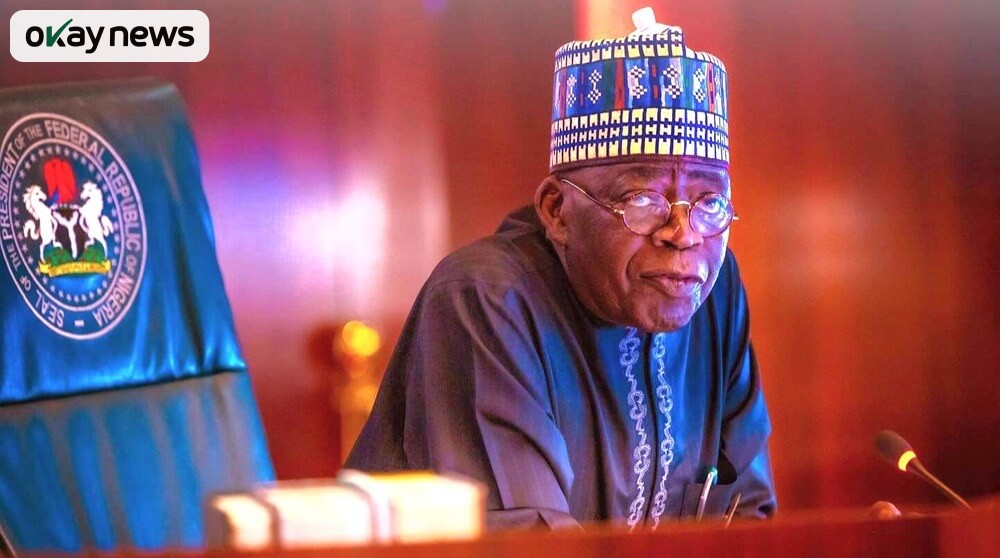
Dada Olusegun, Special Assistant on Social Media to Nigeria’s President, Bola Ahmed Tinubu, made the claim in a post on X, formerly known as Twitter, on Tuesday, 20 January 2026, arguing that the Tinubu administration’s “Renewed Hope” policy agenda has helped reduce the cycle of industrial disputes that have repeatedly shut down campuses for decades.
Okay News reports that Olusegun said ASUU has embarked on only one strike since President Tinubu was inaugurated on Monday, 29 May 2023, describing it as a short warning action rather than a prolonged shutdown.
“The Academic Staff Union of Universities (ASUU) has only gone on strike once since the inception of the Renewed Hope administration about three years ago; a warning strike that lasted for nine days.
“This feat, which marks a different trajectory from the previous annual strikes, did not happen by chance; it was made possible by deliberate efforts of the government over the past three years,” he said.
The aide’s remarks come against a long history of industrial stand-offs between ASUU and the Federal Government of Nigeria, often centred on the funding of universities, staff welfare, earned allowances, and the implementation of negotiated agreements that unions say are frequently delayed.
In the same post, Olusegun argued that the government had moved closer to resolving key disputes, citing the renegotiation of the 2009 agreement between ASUU and the Federal Government of Nigeria, an accord that has shaped negotiations on university funding and conditions of service for years.
“With a major breakthrough for the longstanding issue now announced by the FG following the renegotiation of the 2009 agreements, we might have placed a final nail on the coffin of ASUU strikes,” he said.
While Olusegun’s position is that strikes have reduced under President Tinubu, the broader dispute climate has not completely disappeared, with ASUU at different times issuing ultimatums and engaging in brief warning actions over issues such as funding commitments and staff allowances, even when there has been no prolonged nationwide shutdown.
Olusegun also pointed to wider education reforms under the Renewed Hope agenda, including the Nigerian Education Loan Fund (NELFUND), a Federal Government-backed student loan scheme designed to support eligible learners with financing for higher education.
He said further details would be provided to show how the administration has tried to tackle the recurring causes of strikes in public universities, then listed some actions and commitments.
Before the list, it is important to note that several abbreviations referenced by the aide include: the Federal Government of Nigeria (FG), the Integrated Payroll and Personnel Information System (IPPIS), and Earned Academic Allowances (EAA).
Listing some of the measures, he said: “Removal from IPPIS — Federal tertiary institutions were exempted from IPPIS, allowing universities to process their own payrolls and enhancing autonomy.
“Expanded Negotiation Committee — unified all tertiary unions under one committee.
“Financial Interventions — ₦150 billion allocated in the 2025 budget for university revitalisation, with the allocation planned to be released in three tranches of ₦50 billion each.
“Earned Academic Allowances (EAA) — ₦50 billion released for earned academic allowances.
“Landmark Agreement and Salary Review — signed on January 14, 2026.”