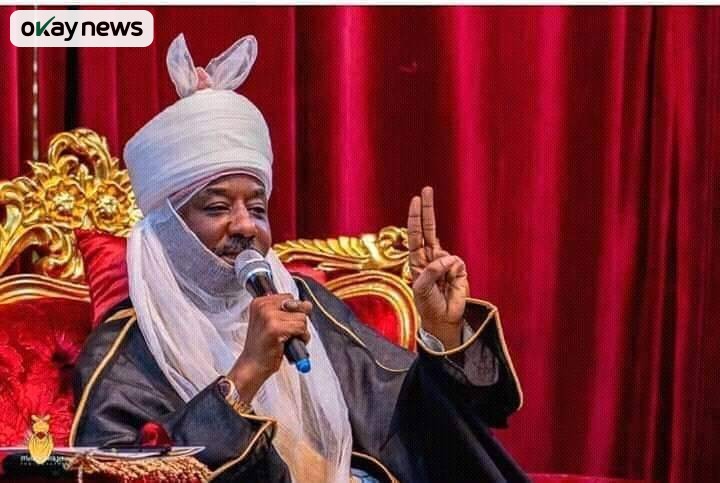
The Emir of Kano, Muhammadu Sanusi II, a prominent traditional ruler in Kano, a major city in northern Nigeria, has said traditional institutions remain important to nation-building and good governance in Nigeria, Africa’s most populous country.
Speaking during a television interview on Wednesday, 4 February 2026, Sanusi argued that he does not need constitutional approval to offer advice to Nigeria’s president or to a state governor on issues he believes affect the country. Okay News reports that he said his responsibility to speak comes from the people he leads, not from any written provision.
Sanusi described traditional institutions as key pillars for strengthening leadership and governance, calling on leaders and citizens to take nation-building more seriously. He insisted that, when he believes the country is on the wrong path, he should be able to raise concerns directly with elected authorities.
He said, “I do not need the Constitution to advise the President,” adding that if he sees something he believes is wrong, he can approach the president and say so. He also maintained that he can similarly advise a governor on what he believes should be done.
The traditional ruler also spoke about political inclusion, urging greater participation by women in national development. He said women have important roles to play in governance and called for more women to be elected into public offices.
On social issues, Sanusi condemned domestic violence and rejected cultural excuses for abuse. He said it is wrong for any man to beat a woman because of claims that culture allows it, stressing that women are citizens who deserve protection.
“Violence happens in all societies,” he said, arguing that abuse often grows from unequal power relations. He added that, in many communities, the most vulnerable people, including women, children, the poor, and people living with disabilities, suffer the worst consequences.
Sanusi, who is widely known for using his public platform to speak on economic policy, social injustice, and gaps in education, noted that Nigeria’s constitution does not give traditional rulers formal executive or legislative powers. Instead, they are largely seen as custodians of culture with mostly ceremonial responsibilities.