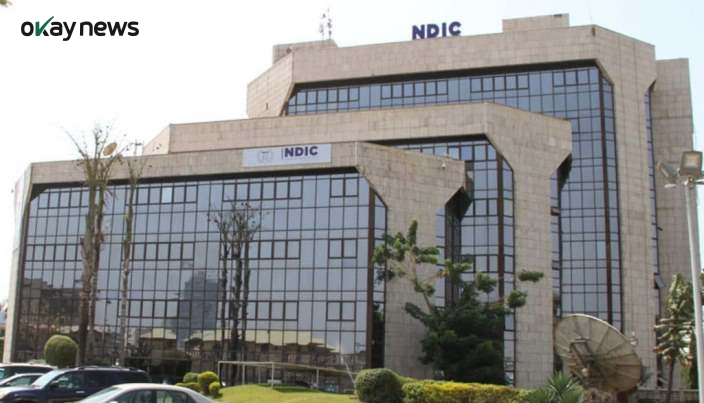
Abuja, Nigeria – Debt recovery agents working with the Nigeria Deposit Insurance Corporation have identified secrecy, insider collusion, and weak loan documentation as major obstacles to recovering debts from more than 600 failed financial institutions across the country.
Okay News reports that the agents spoke on Thursday in Abuja during the NDIC Sensitisation Seminar for the Corporation’s Debt Recovery Agents. Augustine Ukauzo, an agent with Consecrated Law Firm, stated that poor due diligence by officials of defunct banks has made debt recovery increasingly difficult, with some officials approving loans based on personal relationships rather than proper credit assessment, leaving little documentation to trace borrowers.
Ukauzo noted that bank officials sometimes connive to give loans without the borrower owning commensurate assets, adding that if officials did what they were supposed to do, banks would not fail. Another agent, Abdullahi Tahir, urged banks and regulators to make the Bank Verification Number mandatory for loan approvals to improve accountability, arguing that linking BVN to corporate accounts would help trace borrowers across multiple entities where they take loans and then abandon compromised companies.
The NDIC currently manages assets of over 600 failed financial institutions, including commercial banks, microfinance banks, and other deposit-taking entities. Last month, the corporation declared a second liquidation dividend of N24.3 billion to depositors of defunct Heritage Bank Limited whose balances exceeded the insured limit of N5 million. In December 2025, the NDIC began liquidation processes for ASO Savings and Loans Plc and Union Homes Savings and Loans Plc after the Central Bank revoked their operating licences.
Olufemi Kushimo, Director of the Legal Department at NDIC, said the seminar aimed to educate agents on expanded powers granted under the NDIC Act 2023, describing it as a comprehensive recovery tool designed to enhance the corporation’s capacity to recover debts. Patricia Okosun, Director of the Asset Management Department, noted that frequent litigation has also slowed recovery efforts, but the new Act provides powers to foreclose collateral even when debtors run to court.
NDIC Managing Director Thompson Sunday recently stated that the updated legal framework, alongside BOFIA 2020, empowers the corporation to pursue and prosecute parties responsible for bank failures while improving asset recovery mechanisms. Strengthening debt recovery processes remains critical to maximizing returns for depositors and creditors of failed banks. The new legal framework provides expanded tools for debt recovery, but effective implementation depends on addressing the structural obstacles identified by agents.