
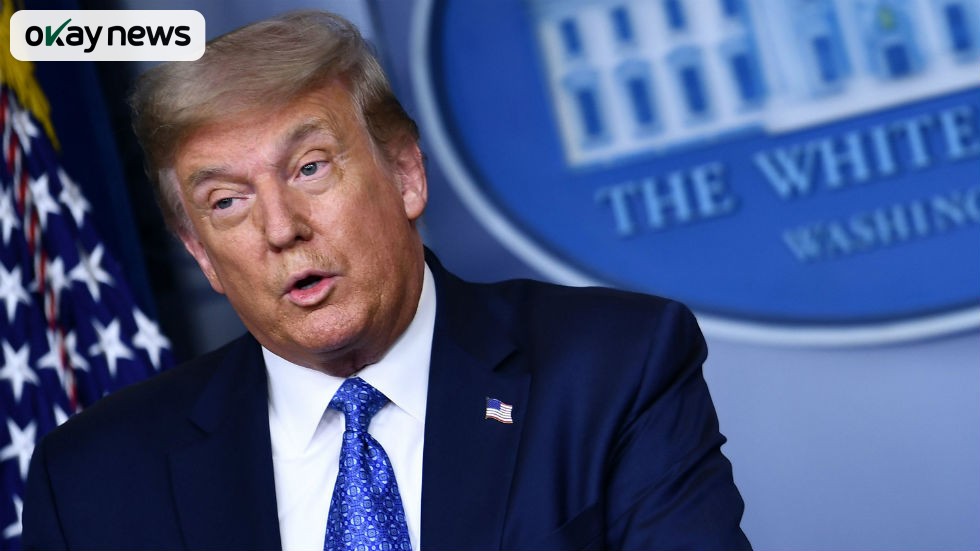
United States (US) President Donald Trump says talks with Iran went well, and more discussions are coming soon.
He spoke on Saturday, 7 February 2026, while travelling on Air Force One, the US presidential aircraft.
The comments followed indirect talks in Muscat, the capital of Oman, a Gulf country on the Arabian Peninsula. Okay News reports that the talks were mediated by Oman, with the delegations not meeting publicly face to face.
Another Round Expected Next Week
Trump said Washington had “very good talks” with Iran.
He added that both sides would meet again “early next week.”
Iran also said it expects more negotiations and described the atmosphere as positive.
Sanctions And Tariff Threats Announced
Soon after the talks ended, the US announced new sanctions on shipping entities and vessels.
The measures aim to curb Iran’s oil exports.
Trump also signed an executive order that could allow tariffs on goods from countries doing business with Iran.
Any levies could affect trade involving countries such as China, Germany, and the United Arab Emirates.
Nuclear Program At The Center
The talks were the first between the two sides since the US joined Israel’s war with Iran in June, including strikes on Iranian nuclear sites.
Trump warned that failure to reach a deal would bring harsh outcomes. “If they don’t make a deal, the consequences are very steep,” he said.
Iran’s Foreign Minister, Abbas Araghchi, said the discussions focused only on Iran’s nuclear program.
Western governments say Iran’s nuclear work could be aimed at making a bomb, while Tehran says it is for peaceful purposes.
Other Disputes Still Linger
The US delegation was led by Middle East envoy Steve Witkoff and Trump’s son-in-law, Jared Kushner.
The US side had also wanted issues like Iran’s support for militant groups, its ballistic missile program, and its treatment of protesters discussed.
Araghchi told Iranian state television that arguments were exchanged in “a very positive atmosphere.”
He said both sides agreed to continue negotiations, and urged Washington to avoid “threats and pressure” so the talks can proceed.
Regional Voices And Security Risks
Images published by the Oman News Agency showed Admiral Brad Cooper, the commander of US Central Command, at the talks.
Sessions took place in the morning and afternoon, with both sides moving between locations linked to Omani Foreign Minister Badr Albusaidi.
Qatar, a US ally in the Gulf, said it hopes the talks lead to a broad agreement that boosts regional stability.
France’s Foreign Minister, Jean-Noel Barrot, called on Iran to stop being a “destabilising power,” citing its nuclear work and support for groups he described as “terrorist.”
He also urged Iran-backed groups to show restraint if military tensions rise.
Protest Crackdown And “Maximum Pressure”
Trump previously threatened military action after Iran’s crackdown on protesters last month, which rights groups say killed thousands.
The Human Rights Activists News Agency (HRANA) said it confirmed 6,505 protesters were killed, along with 214 security force members and 61 bystanders.
HRANA also said 51,000 people have been arrested, and raised concerns about forced confessions.
Rights groups said a wide internet shutdown, lasting more than two weeks, has made it hard to assess the full scale.
In recent days, Trump has focused more on Iran’s nuclear program.
The US has also moved a naval group led by the United States Ship (USS) Abraham Lincoln into the region.
Iran has repeatedly said it would strike back at US bases in the region if attacked.
US State Department spokesman Tommy Pigott said the sanctions align with a “maximum pressure campaign” targeting what he called illicit Iranian oil and petrochemical exports.