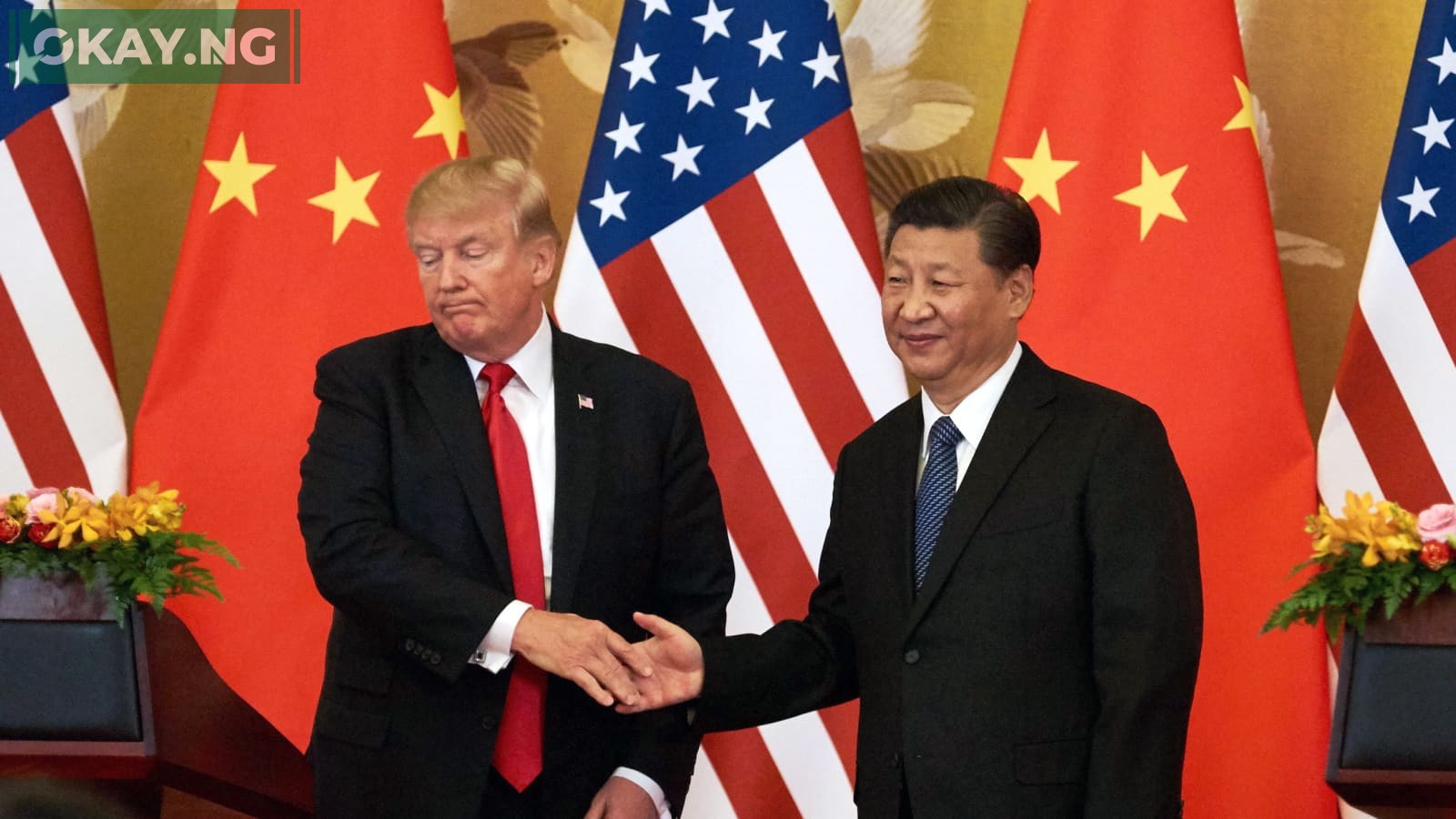
The United States and China reignited their trade war this week as President Donald Trump imposed 10% tariffs on all Chinese imports effective Thursday, prompting Beijing to retaliate within minutes with levies targeting U.S. energy, agriculture, and tech sectors. The escalation, tied to Trump’s demand for China to halt fentanyl flows, risks derailing global markets still reeling from pandemic disruptions.
At 12:01 a.m. ET Thursday, Trump’s tariffs took aim at $350 billion in Chinese goods. By dawn in Beijing, China’s Finance Ministry fired back with 15% duties on U.S. coal and LNG and 10% on crude oil, farm equipment, and select autos, effective February 10.
“The trade war is in the early stages, so the likelihood of further tariffs is high,” warned Oxford Economics, which downgraded China’s 2024 GDP growth forecast to 4.2% amid the turmoil.
China’s Counterpunch: Rare Earths and “Unreliable Entities”
Beyond tariffs, Beijing unveiled a multi-pronged strike:
- Anti-monopoly probes into Alphabet’s Google.
- Export controls on tungsten, tellurium, and other rare earths vital for EVs, semiconductors, and renewables.
- Blacklisting U.S. firms Calvin Klein (PVH Corp) and Illumina for “unreliable” practices.
“China controls 60% of global rare earth mining and 90% of processing,” noted BloombergNEF analyst Sophie Lu. “This isn’t just trade—it’s a chokehold on the energy transition.”
Fentanyl: The Flashpoint
Trump tied tariff hikes to China’s alleged inaction on fentanyl, a synthetic opioid linked to 74,000 U.S. deaths in 2023. “If they’re not stopping [fentanyl], tariffs will go substantially higher,” he declared. Beijing rebuffed the claim, calling it a “domestic U.S. crisis,” but left room for talks.
Hong Kong’s Hang Seng Index slid 1.8% post-announcement, while S&P 500 futures dipped 0.6%. “Market optimism for a quick deal looks misplaced,” said Natixis economist Gary Ng. Contrastingly, Canada and Mexico escaped 25% tariffs after pledging border crackdowns—a reprieve underscoring Trump’s “America First” pragmatism.
Echoes of 2018
The spat mirrors Trump’s 2018-2020 trade war, which saw $550 billion in tariffs, disrupted supply chains, and a failed $200 billion Chinese purchase pact. Today, the U.S. trade deficit with China sits at $361 billion, per Chinese data, with both sides digging in.
What’s Next?
With Trump postponing talks with Xi Jinping and WTO challenges looming, businesses brace for chaos. As one Shanghai-based exporter told Reuters, “We’re re-routing shipments through Vietnam, but tariffs follow like shadows.”