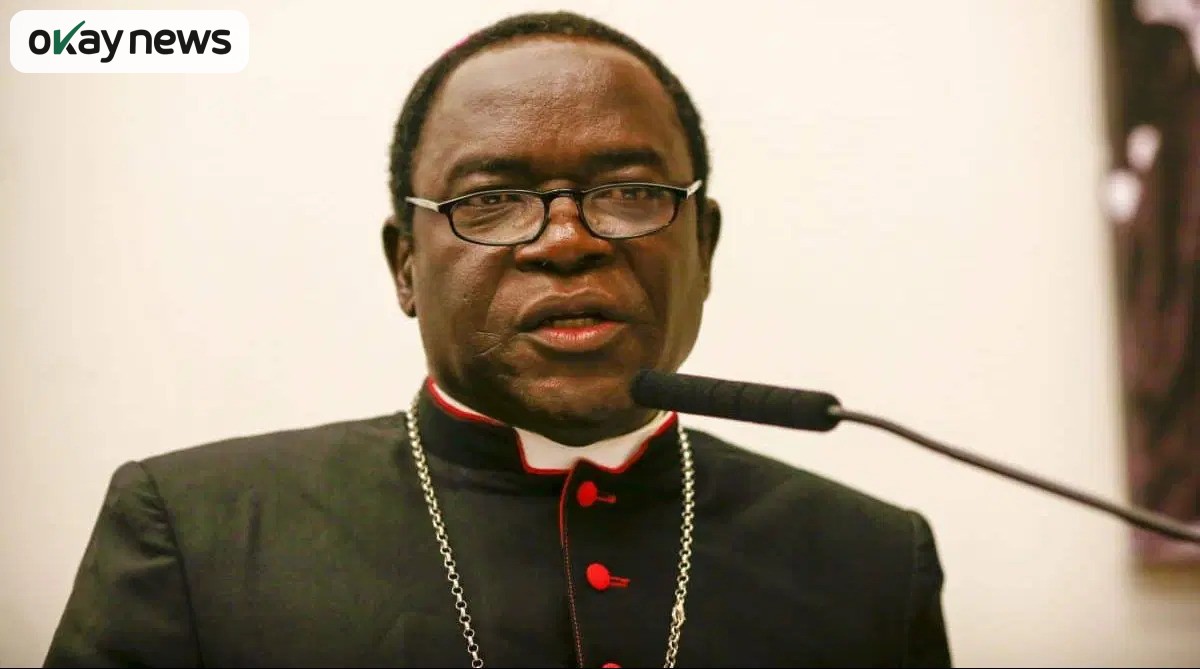
Matthew Kukah, the Catholic Bishop of Sokoto Diocese, has appealed to the United States government not to redesignate Nigeria as a Country of Particular Concern (CPC), warning that such a move could undermine ongoing efforts to strengthen interfaith dialogue and address insecurity across the country.
Kukah made the appeal on Tuesday at the launch of the Aid to the Church in Need (ACN) 2025 Report on Religious Freedom in the World, held at the Augustinianum Hall in Vatican City.
The CPC label, issued by the US government, is applied to countries accused of engaging in “systematic, ongoing, egregious violations of religious freedom.” Some US lawmakers have recently urged President Donald Trump to impose sanctions on Nigeria, alleging widespread persecution of Christians — a claim the Nigerian government has consistently denied.
Nigeria was first listed as a CPC in 2020 during Trump’s first term, but the designation was lifted by the Joe Biden administration in 2021.
In his remarks, Bishop Kukah said the proposed redesignation would have negative consequences, noting that while incidents of religious intolerance persist, there have been positive steps under President Bola Tinubu’s administration to rebuild trust among citizens.
“I do believe that today, acts of impunity still persist, but it is my view that redesignating Nigeria a Country of Concern will hurt the initiatives we are working on with the current government to collectively resolve the nagging problems of, first, the persecution of Christians and, of course, the larger issues of ending the mindless killings of our citizens,” Kukah said.
He cautioned that such a move would only deepen divisions, saying, “Designating my country, Nigeria, a Country of Concern will only make our work in the area of dialogue among religious leaders in our country and elsewhere with the Nigerian state even harder. It will only increase tensions, sow doubt, open windows of suspicion and fear and simply allow the criminals and perpetrators of violence to exploit.”
Kukah also called for greater vigilance from global organisations and civil society groups, urging them to focus on ending impunity rather than punitive designations.
Reflecting on the past, he accused the Obama and Biden administrations of undermining Nigeria’s counterinsurgency efforts during the Goodluck Jonathan era by restricting access to military equipment.
“I believe that the Obama and Biden administrations were complicit in the way they handled the fight against Boko Haram under the presidency of Goodluck Jonathan. The decision to block Nigeria’s access to the required weapons to end this violence by the Obama administration and their drive to impose President Buhari on Nigeria pushed back this fight,” he stated.
Kukah appealed directly to President Donald Trump, urging him to lift the US ban on weapons sales to Nigeria, saying it would help the country defeat extremist groups.
“I therefore appeal to President Donald Trump, who is already working hard to show that a peaceful world is possible with his historic achievement in the Middle East, to lift the ban and allow Nigeria access to the military tools it requires to free our country from the stranglehold of these evil men,” he added.