United States President Donald Trump’s recent threat to launch a military invasion of Nigeria has triggered widespread concern among financial analysts and investors, raising the risk premium on Nigerian assets and potentially undermining the country’s fragile economic recovery.
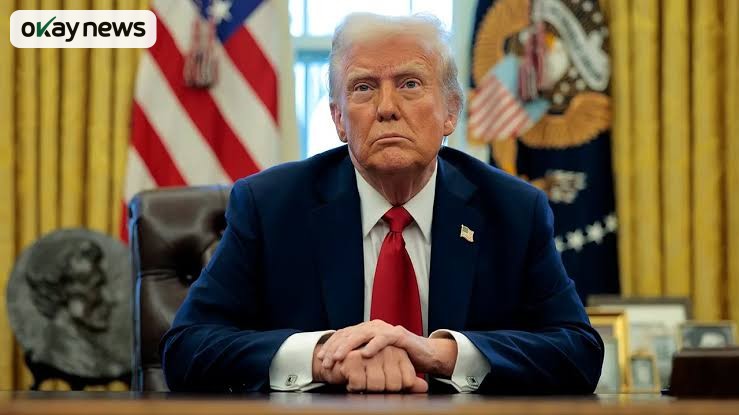
The threat, issued via Trump’s official X (formerly Twitter) account, followed his designation of Nigeria as a “Country of Particular Concern” over alleged religious persecution and genocide against Christians.
On Saturday, 1 November 2025, President Trump ordered the Pentagon to prepare for “possible action” in Nigeria, stating that the US may “go in guns-a-blazing” to eliminate Islamic terrorists accused of committing atrocities. While no formal military action has been taken, the rhetoric alone has sent shockwaves through Nigeria’s financial markets and diplomatic circles.
Nigeria, Africa’s largest crude oil producer, had only recently been removed from the Financial Action Task Force (FATF) grey list, a move expected to boost investor confidence and attract private capital. However, analysts warn that Trump’s remarks could reverse these gains. Bosun Obembe, a Lagos-based treasury analyst, noted that while the impact may be limited without sanctions, some impact investors could exit, slowing the momentum of reform-driven growth.
Christopher Akinbobola, a finance policy analyst, highlighted the reputational damage caused by the allegations, which could prompt multinational firms to delay or suspend investment decisions across key sectors such as energy, telecoms, agribusiness, and fintech. He warned that foreign direct investment may become more vulnerable, and the naira could face downward pressure as capital outflows intensify, potentially forcing the Central Bank of Nigeria (CBN) to intervene more aggressively.
The naira, which closed October at ₦1,421.7 per US dollar with a gain of ₦33.50, has shown rare stability this year, defying oil price volatility. However, this stability is now at risk due to heightened political and diplomatic uncertainty. Portfolio inflows, projected to reach $16.08 billion by year-end, may fall short if investor sentiment deteriorates.
Nigeria’s plans to issue $2.3 billion in Eurobonds later this year could also be affected, as investors reassess the country’s risk profile. Kemi Akinyemi, an emerging-markets strategist, explained that even without direct sanctions, the perception of political instability can lead fund managers to reprice frontier-market exposure, increasing the cost of capital.
The country’s reliance on US and allied support—totalling over $7.8 billion in security and humanitarian aid over the past decade—adds another layer of vulnerability. A suspension of this assistance could widen Nigeria’s fiscal gap, increase borrowing costs, and strain the currency–debt service dynamic.
As the situation unfolds, the international amplification of Trump’s remarks may influence multilateral institutions and credit rating agencies, further complicating Nigeria’s economic outlook.