The Federal Republic of Nigeria has renewed its push for deeper continental cooperation aimed at reversing Africa’s escalating cancer crisis, warning that cancer has now become a leading cause of death on the continent, surpassing Human Immunodeficiency Virus and Acquired Immunodeficiency Syndrome, malaria, and tuberculosis combined.
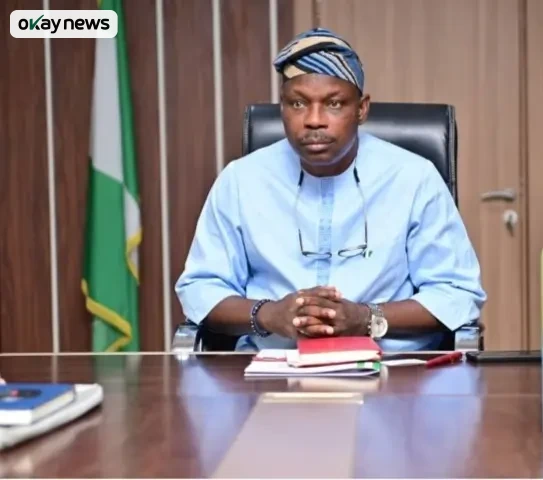
Speaking on Saturday in Luxor, the Arab Republic of Egypt, the Minister of State for Health and Social Welfare, Dr Iziaq Salako, addressed delegates at the Africa Oncology Collaboration and Innovation Forum 2025, a gathering that brought together oncology professionals, policymakers, and health development partners from across Africa.
The event, known formally as “The Organiser of the Africa Oncology Collaboration and Innovation Forum 2025”, was convened by its planning committee in partnership with Egyptian oncology institutions, African oncology networks, and multiple international development collaborators. Okay News reports.
Dr Iziaq Salako cited data from the Global Cancer Observatory, GLOBOCAN, revealing that Africa recorded 1.18 million new cancer cases and 763,843 cancer-related deaths in the year 2022. He described the reality as “an unacceptable burden requiring collective continental action.”
He emphasized that Nigeria, Egypt, and the Republic of South Africa jointly account for the highest number of cancer cases on the continent, with Nigeria alone responsible for more than 10.5 percent of Africa’s entire cancer burden. The Minister attributed the steady rise to lifestyle changes, ageing populations, late detection, weak screening systems, and inadequate treatment infrastructure.
Commending the conveners for aligning their work with the African Union’s Agenda 2063 which champions an integrated and prosperous Africa, Salako also praised the Shefa Alorman Hospital in Luxor, which delegates had visited earlier. He described the cancer-care facility as: “A phenomenal creation Africans should be proud of.”
The Minister highlighted reforms introduced in Nigeria’s cancer control framework during the past 31 months under President Bola Ahmed Tinubu’s administration. According to him, the Federal Government has increased cancer-care budgetary allocations, established six additional cancer centres of excellence, and procured modern oncology equipment.
He further disclosed that Nigeria has developed two fresh strategic documents to guide national cancer control efforts: the National Nuclear Medicine Policy and Strategic Plan, and the National Cancer Control Plan 2026–2030, both expected to be officially launched during the first quarter of 2026. Salako explained that the strategies align with global initiatives including the World Health Organisation Global Breast Cancer Initiative, the Global Initiative for Childhood Cancer, and the Union for International Cancer Control Global Cancer Declaration.
“It will serve as a guide for every oncology stakeholder in Nigeria, from policymakers to researchers, private sector partners, non-governmental organisations and even survivors,” he noted.
Addressing the challenge of cervical cancer, the Minister disclosed that almost fifteen million girls aged nine to fourteen years have been vaccinated against the Human Papillomavirus since its inclusion in Nigeria’s routine immunisation schedule in the year 2023. He added that the National Task Force on Cervical Cancer Elimination is targeting the screening of at least fifty percent of eligible women and the treatment of all precancerous lesions by the year 2027.
On the issue of affordability, Salako announced that Nigeria’s National Health Insurance Programme is finalising a dedicated scheme that will provide coverage for cancer treatment. He added that the country is implementing a National Cancer Health Fund and has supported the Nigeria Cancer Society in establishing a private sector-driven cancer intervention fund.
He called on African governments to strengthen what he described as “Healthcare Pan-Africanism”, which emphasizes resource-sharing, collaborative solutions, and unified strategies. The Minister reaffirmed Nigeria’s support for the emerging Africa Oncology Network, describing it as: “A critical tool for a unified continental response.”
He concluded with a pledge that: “Nigeria is ready to contribute to entrench the spirit of oncology collaboration that bridges borders, shares resources and information, and focuses on a jointly-developed roadmap to reduce cancer incidence and mortality.”
Salako stressed that this initiative must include policymakers, health professionals, pharmaceutical firms, entrepreneurs, and technology developers, all committed to “value-based care and equity.”