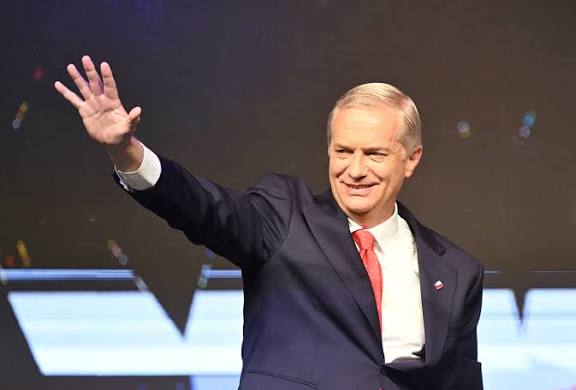
Jose Antonio Kast has won Chile’s presidential election, ending the rule of the centre-left coalition. With nearly all votes counted in Sunday’s run-off, the Republican Party candidate secured about 58 percent of the vote, comfortably defeating former Labour Minister Jeannette Jara of the Communist Party.
Jara conceded defeat shortly after polls closed, saying democracy had spoken and confirming she had spoken with Kast to wish him success for the country’s good. She thanked her supporters and pledged that her political movement would continue working to improve life in Chile.
Speaking to supporters after his victory, Kast described the result as a broad mandate for change, insisting the win belonged to Chileans who no longer wanted to live in fear. He promised to restore order, improve security and get the country working again.
Kast’s victory is being viewed as part of a wider trend of right-wing political gains across Latin America, following similar developments in countries such as Argentina and Ecuador. At 59, this election marks Kast’s third attempt at the presidency and his first success, after losing decisively to outgoing President Gabriel Boric in 2021.
Boric, who became Chile’s youngest president after emerging from student activism, saw his popularity fall significantly during his term amid rising crime, immigration concerns and economic pressures. He was also barred by law from seeking a second consecutive term.
Throughout the campaign, Kast capitalised on public frustration, running on a tough platform focused on cracking down on crime and illegal immigration. His proposals include mass deportations, stricter sentencing laws, expanded use of maximum-security prisons and isolating cartel leaders to prevent them from coordinating criminal activity. He argued that ordinary citizens had been forced to live in fear while criminals operated freely.
Kast’s conservative views extend beyond security. Shaped by his Catholic beliefs, he strongly opposes abortion, including in cases of rape, a stance that drew criticism from human rights groups and political opponents during the campaign.
His candidacy also revived debate about Chile’s painful past. Critics highlighted his previous favourable comments about former military ruler Augusto Pinochet, whose dictatorship followed a 1973 coup and was marked by widespread human rights abuses. Kast has rejected being labelled far right and has sought in recent years to soften his public image, though opponents also pointed to his father’s past membership in the Nazi Party before emigrating to Chile in the mid-20th century.
Despite the controversy, Kast’s win is historic. It is the first time since Chile’s return to democracy in 1990 that such a deeply conservative government will take power. Analysts note, however, that his ability to implement the most hardline elements of his agenda may be limited by a divided National Congress.
International reaction from the political right was swift. Conservative leaders across the Americas congratulated Kast, describing his victory as a boost for regional security, free markets and conservative values. Voting in this election was compulsory for the first time since 2012, with about 15.7 million Chileans eligible to cast ballots.
Kast had finished second in the first round of voting in November but was able to consolidate support from other right-leaning parties in the run-off, giving him a clear edge. He is due to be sworn in as Chile’s next president on March 11.