



The Federal Government and the Academic Staff Union of Universities (ASUU) have formally signed a renegotiated agreement aimed at improving remuneration, welfare, and overall conditions in Nigeria’s public university system.
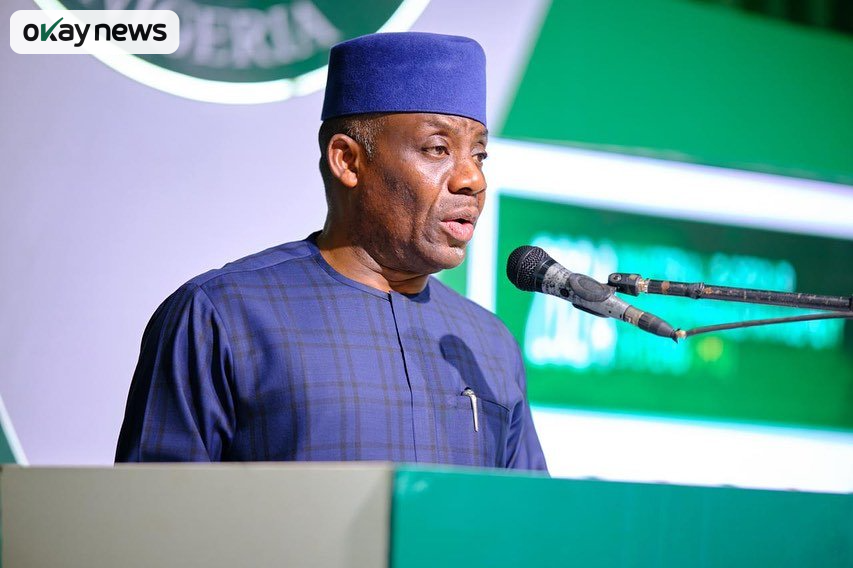
Okay News reports that the agreement was presented on Wednesday in Abuja by the Minister of Education, Dr. Tunji Alausa, marking a significant step toward ending decades of unresolved disputes and recurring industrial actions.
President Bola Ahmed Tinubu took personal ownership of the process, choosing sustained dialogue to resolve long-standing issues that have disrupted academic calendars, affected staff morale, and impacted students for years.
A central provision of the agreement is a 40 per cent salary increase for academic staff in federal tertiary institutions, effective from January 1, 2026, as approved by the National Salaries, Income and Wages Commission.
The increase is implemented through a consolidated academic tools allowance unique to university staff, built into the salary structure, covering journal publications, conference participation, internet access, learned society membership, and book allowances.
Nine previously earned academic allowances have been restructured, made transparent, and tied strictly to duties performed to promote productivity, accountability, and fairness.
The agreement also introduces a new professorial credit allowance, the first of its kind approved by the federal government.
Professors will receive an additional N1.8 million per annum (about N140,000 monthly), while academic readers will receive N840,000 per annum (N70,000 monthly).
This allowance recognises the heavy scholarly, administrative, and research responsibilities of senior academics, enabling them to focus more on teaching, mentorship, innovation, and knowledge production.
Alausa confirmed that implementation has already commenced, with the National Salaries, Income and Wages Commission issuing a circular directing full execution of the wage component.
The agreement follows a renegotiation process that began in 2017 after delays in revisiting the 2009 accord, which was due for review in 2012.
Multiple committees were set up between 2017 and 2022 under various administrations, including those chaired by Wale Babalakin, Munzali Jibrin, and Nimi Briggs, but none produced a final collective bargaining agreement.
The current administration inaugurated a new renegotiation committee chaired by Alhaji Yayale Ahmed in October 2024, leading to the agreement reached about 14 months later.
ASUU’s most recent major industrial action occurred in October 2025, when the union commenced a two-week nationwide strike, marking its 18th strike in 26 years, triggered by the failure to address long-standing demands and repeated negotiation delays.
The strike was later suspended after overnight talks between the union and the federal government.
The new agreement is seen as a critical breakthrough toward addressing root causes of instability in the sector, including funding shortfalls, poor infrastructure, delayed salaries and allowances, and outdated conditions of service.
Stakeholders hope the deal will pave the way for sustained industrial harmony, improved teaching and research environments, and stronger support for Nigeria’s higher education system.



 have formally signed a renegotiated agreement aimed at improving remuneration, welfare, and overall conditions in Nigeria’s public university system.)