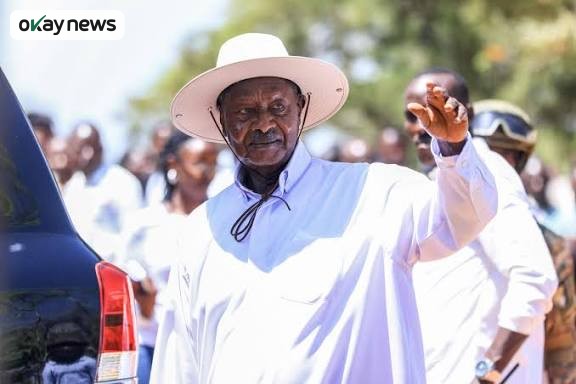
Uganda’s long-serving Head of State, President Yoweri Museveni, secured a seventh presidential term following a contentious election held earlier in the week. His re-election triggered renewed global scrutiny of governance, democracy and political freedoms within the East African nation.
President Museveni, who has led Uganda since he took power in 1986, was announced by the country’s Electoral Commission as the winner on Saturday with 71.65 percent of total votes cast. The announcement came despite reports of internet restrictions, intimidation of political opponents and at least ten deaths linked to election-related violence.
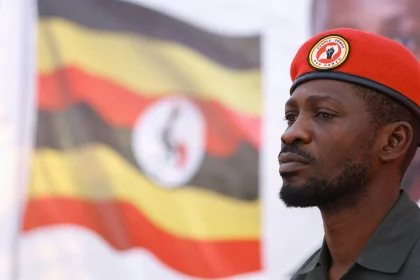
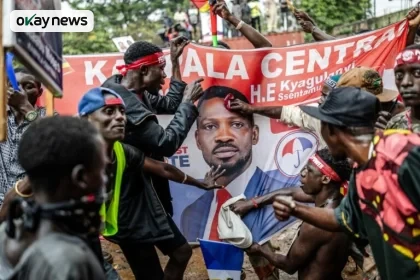
His main challenger, Robert Kyagulanyi — popularly known as Bobi Wine — is a 43-year-old former musician turned opposition politician who has risen to prominence over the last decade. Wine secured 24.72 percent of votes according to the official tally. He later claimed he rejected the results in totality, alleging widespread irregularities and police raids on his residence.
Wine stated that he had been forced into hiding. “I want to confirm that I managed to escape from them,” Wine posted on the platform X on Saturday. “Currently, I am not at home, although my wife and other family members remain under house arrest.” He alleged that “these criminals are looking for me everywhere and I am trying my best to keep safe.”
The opposition leader has previously faced multiple arrests, legal battles and alleged state pressure since entering Uganda’s political arena, including during his first presidential run in 2021. His confrontations with the security establishment have made him a focal point for young Ugandans who view him as an alternative to the country’s decades-old political order.
Heavy Security Presence And Public Fear In Kampala
Following the Electoral Commission’s declaration, a large contingent of security forces was deployed across Kampala, Uganda’s capital city. Journalists from global news agencies confirmed soldiers and police officers stationed throughout strategic intersections in an effort to deter potential protests similar to those experienced in neighbouring Kenya and Tanzania in recent months.
Police authorities denied storming Wine’s residence but admitted they were “controlling access in areas we feel are security hotspots.” Police Spokesman Kituuma Rusoke stated that the intention was to avoid gatherings capable of inciting unrest. “We have not necessarily denied people accessing him but we cannot tolerate instances where people use his residence to gather and incite violence,” Rusoke told reporters in Kampala.
Local residents living near Wine’s home described scenes of significant tension. A stall-owner named Prince Jerard, aged 29, recounted the presence of a helicopter and a drone hovering over the neighbourhood while numerous officers patrolled the vicinity. “Many people have left the area,” Jerard said. “We have a lot of fear.”
Wine, who labels himself “the ghetto president” in a nod to the Kampala slums where he was raised, accused the government of “massive ballot stuffing” and alleged that security agents attacked his party operatives while internet services were shut down.
The Ugandan authorities ordered a nationwide internet blackout on the eve of the election, a move that was widely criticized by civil society groups and digital rights organisations. The blackout remained active through the announcement of results, complicating election observation and hampering communications between families, journalists and political groups.
African Observers Fault Intimidation And Restrictions
International observers from African institutions issued mixed assessments. Election monitors representing the African Union, the Common Market for Eastern and Southern Africa (COMESA) and the Intergovernmental Authority on Development (IGAD) acknowledged that they did not witness ballot stuffing during the voting process. However, they criticized the climate of intimidation.
Former President of Nigeria, Goodluck Jonathan, who led the observer delegation, stated that “reports of intimidation, arrest and abductions” had undermined confidence in the process. He noted that such practices “instilled fear and eroded public trust in the electoral process.”
Jonathan added that the ongoing internet shutdown “disrupted effective observation” and “increased suspicion” at a time when transparency should have been paramount. Despite these criticisms, he described the conduct on election day itself as “peaceful.”
Parliamentary Dominance And Opposition Vulnerability
Provisional parliamentary results indicated that the ruling National Resistance Movement (NRM) was poised to retain a commanding majority in Uganda’s legislature. Political analysts argued that the presidential contest had largely been a formality due to the state’s overwhelming control of security and institutional mechanisms.
President Museveni, now entering his fortieth year in power, first emerged as a guerrilla commander before assuming the presidency in 1986. Throughout his rule, several constitutional amendments have enabled him to bypass term and age limits that could have curbed his tenure. Dissenting political opposition figures have often faced arrests, trials or forced exile.
One of the most notable opposition leaders, Kizza Besigye, ran against Museveni four times in past presidential elections. He was abducted in Kenya in 2024 and returned to Uganda where he is currently facing a military trial on allegations of treason.
Reports of election-related violence resurfaced in various regions. Muwanga Kivumbi, a Member of Parliament representing Wine’s political movement in the Butambala region of central Uganda, claimed that ten of his campaign agents were killed by security forces during an overnight raid. Police disputed the narrative, asserting that an “unspecified number” of individuals were “put out of action” while attempting to overrun and burn a local tally centre and police station.
Okay News reports that the international community will likely intensify calls for political reforms in Uganda as President Museveni embarks on yet another term. Rights groups have argued that prolonged rule without genuine competition risks driving Uganda into long-term democratic stagnation, even as the country seeks stability, foreign investment and regional influence.