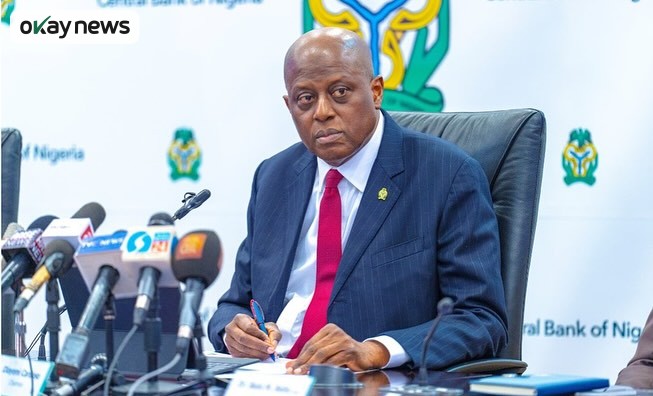
Abuja, Nigeria – Central Bank of Nigeria Governor Olayemi Cardoso has said the bank will strengthen cooperation with continental partners following Nigeria’s approval as a permanent member of the Board of the African Monetary Institute.
Okay News reports that the decision was taken at the 39th Ordinary Session of the Assembly of the African Union in February 2026, after earlier adoption by the AU Executive Council. The African Monetary Institute, established under the AU’s financial institutions framework, serves as a precursor to the African Central Bank, which will be headquartered in Abuja. Cardoso described the approval as a landmark in Africa’s financial integration drive and a boost to Nigeria’s continental standing.
“This historic decision marks a significant milestone in Africa’s financial integration journey and further emphasises Nigeria’s strategic role in shaping the continent’s evolving financial architecture,” he said in a statement on Monday. He added that hosting the African Monetary Institute and subsequently the African Central Bank would strengthen Nigeria’s influence in developing Africa’s single currency framework.
The AU Heads of State endorsed Nigeria’s standing representation on the African Monetary Institute Board for the duration of the transitional phase preceding the African Central Bank’s formal establishment. The move is expected to advance macroeconomic convergence, deepen monetary cooperation, and support Africa’s long-term objective of financial sovereignty.
The CBN disclosed it worked with the Ministries of Foreign Affairs, Justice, and Finance to secure the approval. The bank led technical efforts that produced the Draft African Monetary Institute Statute and provided initial hosting facilities for the institute’s launch. It also participated in inter-ministerial engagements to sustain Nigeria’s advocacy at the highest political level.
Cardoso said the outcome reflected sustained reforms and diplomatic engagement, noting that these efforts have led to improved monetary stability, external reserves management, banking supervision, and payment system modernisation. “Overall, the achievements of these efforts are reaching new heights, evidenced by Nigeria’s enhanced credibility and influence across the continent,” he said.
The CBN will continue working with the African Union Commission, the Association of African Central Banks, member states, and development partners to establish a solid foundation for the African Central Bank and the proposed African single currency. Nigeria’s permanent seat on the African Monetary Institute Board includes a sunset clause that takes effect upon the establishment of the African Central Bank, in line with AU principles of rotation and regional balance.