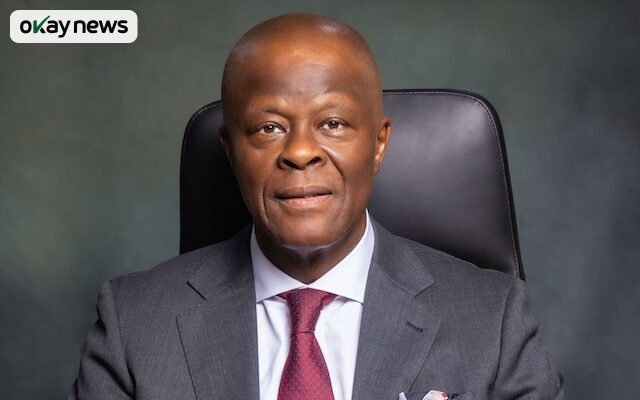
The Federal Government recorded an 85 per cent performance in capital expenditure for the 2024 fiscal year following the extension of the budget implementation period, Minister of Finance and Coordinating Minister of the Economy Wale Edun has disclosed.
Okay News reports that Edun made the revelation on Thursday at the 2026 Macroeconomic Outlook event organised by the Nigerian Economic Summit Group in Lagos.
He explained that the National Assembly extended the 2024 budget implementation deadline to December 2025 to allow completion of ongoing projects and address funding shortfalls.
This decision, Edun said, contributed to strong execution levels, resulting in aggregate capital expenditure reaching 85 per cent performance.
The extension, however, drew criticism from civil society groups under the Nigerian Civil Society Economy Action coalition, who accused the government of constitutional breaches and fiscal illegality after the passage of revised 2024 and 2025 budgets in December.
Edun acknowledged that capital expenditure in 2025 would be lower, as the government prioritised completing existing projects over starting new ones.
He emphasised that all statutory obligations, including foreign and domestic debt service and salaries, were fully met despite fiscal challenges.
Edun described Nigeria’s fiscal position as demonstrating resilience and marked improvement, anchored on discipline, management, and transparency-focused reforms.
He highlighted that sustained capital spending is critical to improving food prices, reducing the cost of capital, expanding mortgage lending, boosting electricity supply, and accelerating road construction.
The minister stated that Nigeria has moved from crisis management to a phase of stabilisation and consolidation, stressing that continued reforms are necessary to translate stability into long-term growth.
Looking ahead, Edun said the 2026 budget, tagged “Budget of Consolidation, Renewed Resilience, and Shared Prosperity,” aims to convert fiscal stability into tangible benefits for everyday Nigerians.
“We cannot overemphasise that it is not the metrics, it’s not the percentages. It is the experience and the improvement in the lives of everyday Nigerians,” he said.
He reaffirmed the government’s commitment to sustained capital spending and economic reforms, with a focus on inclusive, job-rich growth.