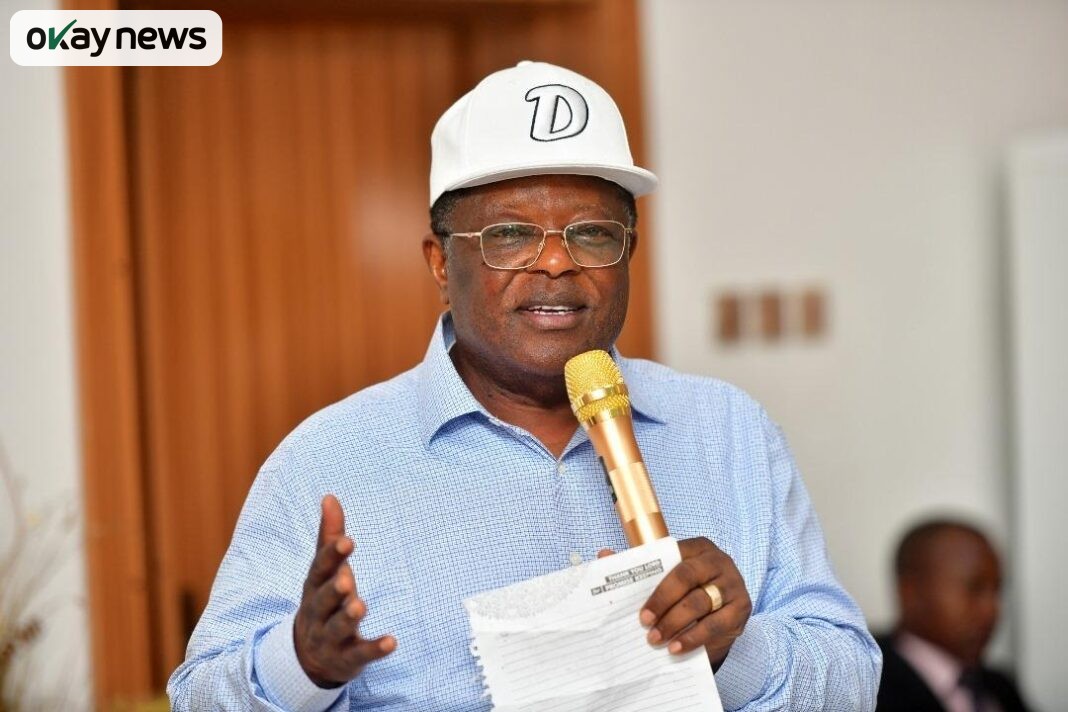
The Federal Government has commenced a new phase of national road development aimed at constructing highways designed to last between 50 and 100 years, according to the Minister of Works, David Umahi.
Speaking during an inspection of the Abuja–Kaduna–Zaria–Kano Expressway (Section I), Umahi explained that the initiative marks a significant shift from the country’s old method of road construction, which he described as “short-lived and unsustainable.”
He said the new approach focuses on innovation, durability, and value for money by combining recycling, milling, and concrete reinforcement. “We are building roads that will stand the test of time, roads that will last between 50 and 100 years, save public funds, and promote economic growth,” Umahi stated.
According to a statement from the Director of Press and Public Relations at the Ministry of Works, Mohammed Ahmed, the minister emphasized that the fresh design standards will help reduce maintenance costs while ensuring resilience against harsh weather conditions.
Okay News reports that Umahi highlighted the need to move away from the old “cut-and-fill” construction method, which has often been blamed for frequent road failures. He explained that the ministry now recycles existing asphalt layers, which he noted have become more compact and durable over the years.
“You cannot achieve a better California Bearing Ratio by simply bringing laterite on the road. The existing subgrade, which has consolidated over years of traffic, has a stronger bearing capacity than a new one. That is why we are insisting on milling, stabilising, and strengthening rather than removing old asphalt layers and replacing them,” the minister said.
Umahi also commended the contractor handling the Abuja–Kaduna section, Infiouest International Limited, for upholding international standards and deploying over 300 heavy-duty machines to ensure timely delivery.
He added that President Bola Tinubu’s Renewed Hope Agenda is championing the shift from flexible asphalt pavements to rigid concrete pavements across major highways — a move expected to save the nation billions in road maintenance.
“Wherever we have potholes, we don’t just patch; we treat the entire section with a stone base and stabilise it where necessary with cement. This ensures stability and prevents water from undermining the structure,” Umahi explained.
The Minister of State for Works, Bello Mohammed Goronyo, who joined the inspection, described the project as a reflection of Tinubu’s vision to deliver durable and sustainable infrastructure that will serve as national assets.
He praised Umahi’s hands-on leadership, saying, “The minister is mentoring a new generation of engineers on quality construction practices.”
Officials of the ministry confirmed that continuous on-site inspections have improved project quality and contractor accountability.
Chairman of Infiouest International Limited, Joseph Aboue Jaoude, said the expressway represents a milestone in Nigeria’s road construction industry, serving as a new benchmark for quality and durability.
Similarly, Presidential Aides on Community Engagement, Abiodun Essiet (North Central) and Abdullahi Tanko Yakasai (North West), lauded the Tinubu administration’s commitment to infrastructure renewal, describing the Abuja–Kaduna–Zaria–Kano project as a symbol of development and service delivery.
Nigeria’s extensive road network, which spans over 195,000 kilometres, has long suffered from poor maintenance and substandard construction, leading to frequent accidents and costly repairs.
Once completed, the 375-kilometre dual carriageway is expected to reduce travel time significantly, enhance trade connectivity, and strengthen security links across northern Nigeria.