The Federal Ministry of Education has clarified that it has not prevented students under the age of 18 from writing the West Africa Senior School Certificate examination and the National Examination Council, Exams.
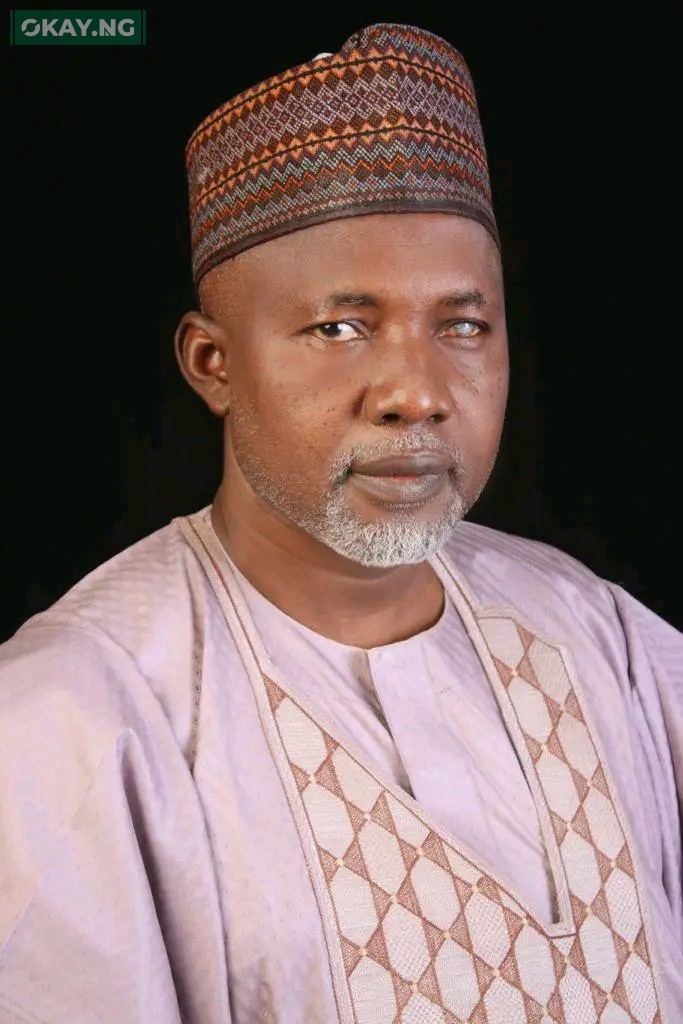
Minister of State for Education, Dr. Yusuf Sununu, made this clarification on Friday in Abuja while answering questions from the press at an event to mark the 2024 International Literacy Day.
Sununu said that public misunderstanding and misinterpretation regarding the remarks of the Minister of Education Prof. Tahir Mamman was very disappointing.
He said that the minister was talking about the age of entry into tertiary institutions of 18 years, as practiced in the 6:3:3:4 educational system.
“We agreed that we see this as a work in progress. The National Assembly is working and so are we.
“It was shocking to say that a university in this country accepted children aged 10, 11 and 12, this is completely false.
“We are not saying that there are no exceptions, we know that we can have talented students who have the IQ of an adult even at the age of 6 and 7, but they are very few in number.
“There should be a rule and the ministry plans to write a guide on how to identify a gifted child so that parents do not say that we are blocking the chances of their children.
“No one said that no child will sit for WAEC, NECO or any other examination before the age of 18. This is a misunderstanding and a distortion of what we said,” he said.
Speaking on the occasion of the International Literacy Day, Sununu emphasized the essential role of literacy in the promotion of mutual understanding, peace and socio-economic development.
He reaffirmed the federal government’s commitment to addressing literacy challenges through the Renewed Hope Education Roadmap (2024-2027). He stressed that youth and adult literacy was a key element, while he stressed the importance of using students’ mother tongue as a learning tool.
“We need to focus on the role of students’ mother tongue in literacy, which promotes mutual understanding and peace,” he added.
He also emphasized the need for educators well-informed and equipped to teach in local languages, as well as the development of follow-up reading materials in those languages.
On his part, the Executive Secretary of the National Commission for Mass Literacy, Adult Education and Non-Formal Education, Professor Simon Akpama, reaffirmed the Commission’s commitment to integration of multilingual education in school literacy programs. “In an increasingly interconnected world, multilingual education is not only a necessity, but is a means to promote peace and cultural respect,” he said.
The theme of this year’s celebration is “Promoting Multilingual Education: Literacy for Knowledge and Peace.”