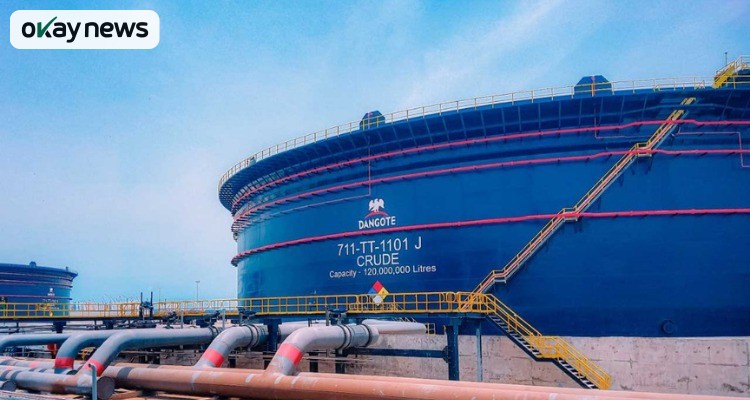
The Government of Ghana has announced plans to import refined petroleum products from Nigeria’s Dangote Petroleum Refinery, strengthening regional energy cooperation ahead of growing fuel demand across West Africa. The commitment was disclosed at the ongoing Nigerian International Energy Summit (NIES) in Abuja, where Ghanaian officials highlighted the limits of their domestic refining capacity.
Speaking at the summit, the Chief Executive Officer of Ghana’s National Petroleum Authority, Godwin Kudzo Tameklo, explained that Ghana’s refineries are too small to meet national fuel needs. With only two conventional refineries and a small modular plant producing about 5,000 to 6,000 barrels per day, the country remains heavily dependent on imported crude oil and refined products. He said this reality makes Ghana a natural and ready market for large-scale refineries such as Dangote’s.
Okay News understands that Ghana has already begun formal engagements with Alhaji Aliko Dangote to build a long-term commercial relationship that would allow the country to source petrol and diesel from Nigeria. Tameklo noted that the geographical proximity between both countries would help reduce fuel delivery costs, ultimately making energy more affordable for Ghanaian consumers. He also stressed that stable exchange rates and harmonised regulations across Africa are essential for successful intra-African energy trade.
Meanwhile, the Dangote Group confirmed it has enough capacity to serve both Nigeria and foreign markets. The refinery, with an installed capacity of 650,000 barrels per day, is currently operating at about 85 per cent and produces petrol and diesel. According to Dangote’s Group Vice President for Oil and Gas, Devakumar Edwin, Nigeria requires only about half of the refinery’s output to meet local demand, leaving significant volumes available for export.
The development signals Nigeria’s growing role as a regional energy hub, marking a shift from decades of dependence on imported refined fuel. Analysts say Ghana’s decision could pave the way for similar partnerships across Africa, boosting regional self-sufficiency and reducing reliance on overseas fuel imports.