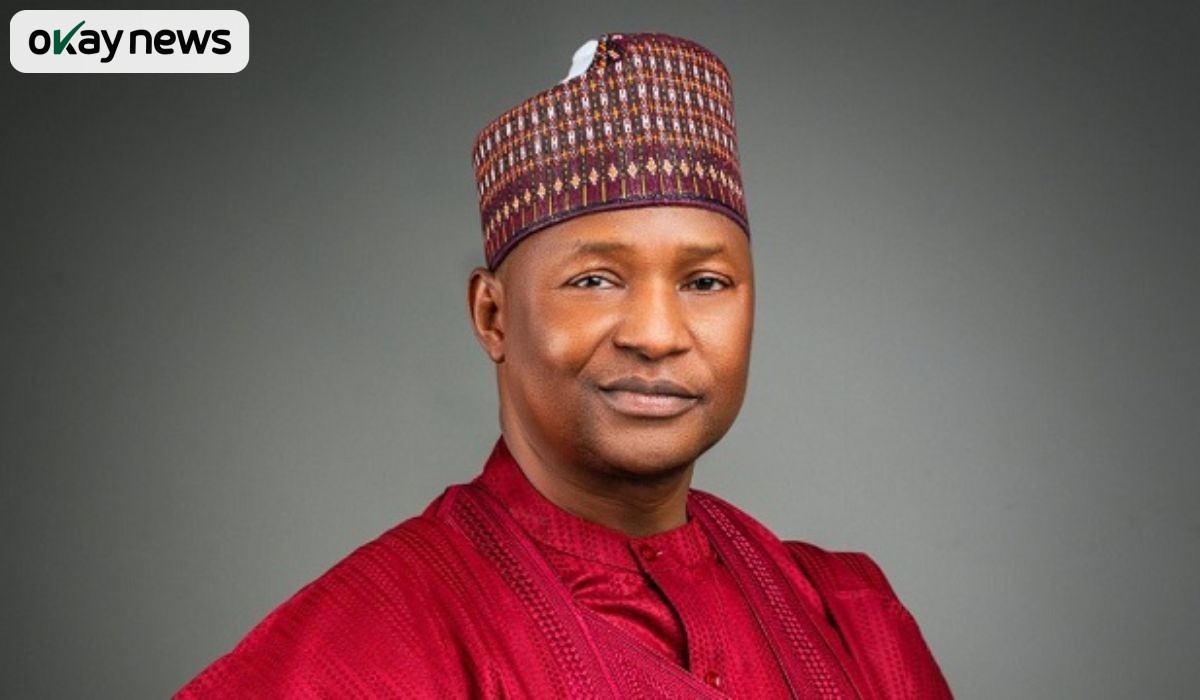
Abuja, Federal Capital Territory, Nigeria – The trial of Nigeria’s former Attorney-General of the Federation and Minister of Justice, Abubakar Malami, Senior Advocate of Nigeria, and his son, Abdulaziz Malami, was postponed on Friday, February 20, 2026, after a public holiday declaration halted court proceedings in Abuja, Nigeria’s capital city.
The case is being heard at the Federal High Court in Abuja, a national-level court that handles serious criminal and constitutional matters. Justice Joyce Abdulmalik adjourned the matter until Friday, February 27, 2026.
The adjournment followed a work-free day declared by the Minister of the Federal Capital Territory, Nyesom Wike, ahead of the area council elections scheduled for Saturday in the Federal Capital Territory. The Federal Capital Territory Administration oversees the capital region of Nigeria.
When reporters visited Court 6 on the third floor of the high-rise court complex around 9:00 am West African Time (WAT, GMT+1), the premises were largely inactive. Only a few court officials were present. Neither the defendants nor their legal representatives appeared in court.
Some lawyers and litigants who arrived for scheduled proceedings were reportedly asked to leave due to the public holiday directive.
The case against Malami and his son was initiated by Nigeria’s Department of State Services (DSS), the country’s domestic intelligence and security agency. On Monday, February 3, 2026, the DSS formally arraigned both men on a five-count charge relating to terrorism allegations and unlawful possession of firearms.
According to the charge sheet marked FHC/ABJ/CR/63/2026, the DSS accused Malami of allegedly refusing to prosecute individuals suspected of financing terrorism. The agency claimed that relevant case files had been forwarded to him during his tenure as Nigeria’s Attorney-General of the Federation and Minister of Justice, a role that makes the officeholder the chief legal officer of the federal government of Nigeria.
The DSS also alleged that the defendants stored firearms at their residence located in Gesse Phase II Area, Birnin Kebbi Local Government Area of Kebbi State, northwestern Nigeria, without lawful authority.
Both defendants pleaded not guilty to all charges when they were first arraigned.
Following the arraignment, the prosecuting counsel, Calistus Eze, asked the court to remand the defendants in DSS custody and to fix a date for trial.
In response, defence counsel, Shuaibu Aruwan, Senior Advocate of Nigeria, made an oral application for bail. He argued that the defendants had already spent more than two weeks in DSS custody.
Justice Abdulmalik declined the oral request for bail, explaining that her court, being a court of record, required a formal written bail application. She directed the defence team to file the appropriate legal documents.
Okay News reports that the next hearing, now scheduled for Friday, February 27, 2026, is expected to address further procedural steps, including any formal bail application and potential trial timelines.
The case has drawn significant national attention because of Malami’s former position as the chief legal officer of the federal government of Nigeria. The outcome could have broader implications for public accountability and national security prosecutions in the country.