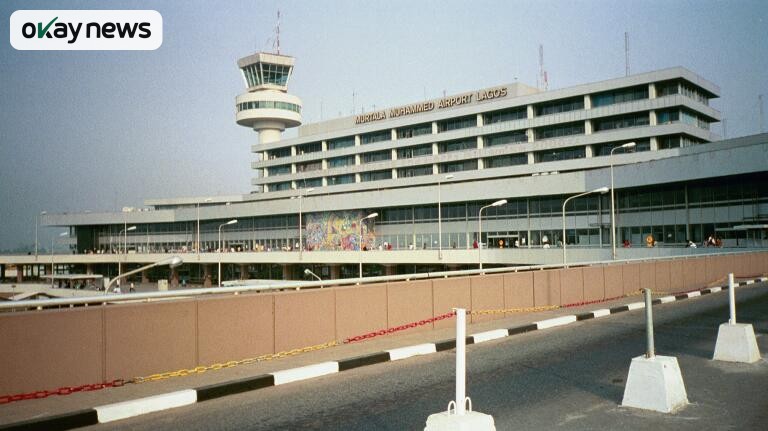
Nigeria’s aviation authorities have announced plans to temporarily shut Terminal One of Murtala Muhammed International Airport (MMIA) in Lagos as part of a broader infrastructure rehabilitation and expansion programme aimed at improving passenger safety and reliability.
The Federal Airports Authority of Nigeria (FAAN) disclosed that the shutdown is expected to take place within the next month, explaining that the facility’s ageing infrastructure can no longer support piecemeal fixes.
The announcement followed public concern after a power outage disrupted operations at the terminal on Saturday. In a statement posted on X on Sunday, FAAN confirmed that the incident was caused by a fault in the terminal’s changeover circuit.
“Our teams took immediate action to bridge the gap and transfer supply to the secondary grid, and interim backup measures were activated to restore services as quickly as possible,” the authority said.
FAAN acknowledged the inconvenience caused to travellers and stakeholders, but stressed that deeper structural limitations make long-term stopgap solutions impractical.
“We apologise to all passengers and stakeholders affected by the disruption and any discomfort it caused. While we continue to implement measures to mitigate such events, Terminal 1 has long-standing infrastructure limitations,” the agency said.
According to FAAN, the forthcoming closure is tied directly to the MMIA Rehabilitation and Expansion Project, which will involve significant upgrades that cannot be carried out while the terminal remains operational.
“As we prepare to shut down Terminal 1 in one month as part of the MMIA Rehabilitation and Expansion Project, it is not feasible to install permanent new or additional backup equipment at this time,” the statement added.
Okay News reports that Terminal One is the older of Lagos airport’s international facilities and has faced recurring operational challenges in recent years, particularly with power supply and capacity constraints.
FAAN thanked passengers and aviation stakeholders for their patience, noting that the current phase marks a transition “from stop-gap solutions to lasting improvements”.