
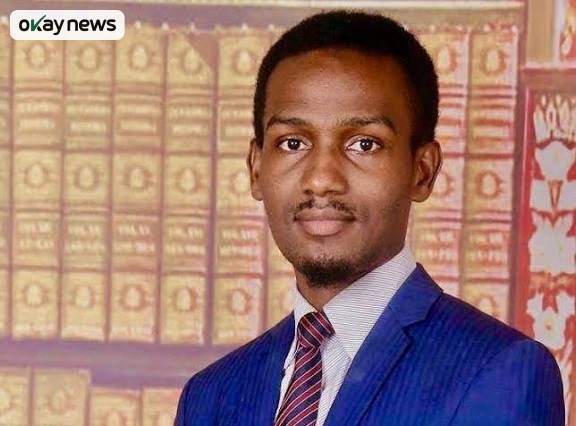
Kaduna, Kaduna State, Nigeria — The Department of State Services, Nigeria’s domestic intelligence agency responsible for internal security, has reopened its investigation into the 2019 disappearance of Abubakar Idris, a Nigerian university lecturer and social media commentator widely known as Dadiyata.
Idris, who lectured at the Federal University Dutsinma in Katsina State in northern Nigeria, was declared missing in early August 2019 after unidentified gunmen reportedly took him from his residence in Kaduna, a major city in Kaduna State. Nearly seven years later, his whereabouts remain unknown.
Okay News reports that security officials are now set to invite suspects for questioning as part of renewed efforts to determine what happened to the academic and online critic.
The renewed investigation comes amid fresh public attention following comments by former Kaduna State Governor Nasir El-Rufai. Speaking on Friday, February 14, 2026, El-Rufai denied any involvement in the disappearance and argued that Idris had primarily criticised the administration of neighbouring Kano State rather than his own government in Kaduna.
“Dadiyata was not a fierce critic of the Kaduna State government. He was a fierce critic of the Kano State government.
“He is a Kwankwasiya guy; he lives in Kaduna and lectures at a university in Katsina State, but is a fierce critic not of Kaduna State. Go and review his timeline,” he said.
El-Rufai further stated, “It was Ganduje that was his problem. I didn’t even know him. We only got the report of Dadiyata’s existence and the fact that he lives in Kaduna State after the family reported to the police that he was abducted as he was returning home in the evening.
“If anybody is to be asked about the disappearance of Dadiyata, it is the Kano State Government; it has nothing to do with the Kaduna State Government. We didn’t even know he existed.”
His remarks prompted a response from Abdullahi Ganduje, the former Governor of Kano State, who rejected any link to the case. In a statement issued by his former Commissioner for Information and Internal Affairs, Ganduje described the claims as “reckless, unfounded, and a clear attempt to shift responsibility for an incident that occurred entirely within Kaduna State.”
He added, “Everyone in Kaduna knew the nature of the criticism he made and who it was directed at.”
The case has also drawn renewed public sympathy following a video interview released on Thursday, February 19, 2026, by Reno Omokri, a Nigerian political commentator and former presidential aide. Omokri visited Idris’s wife, Kadijah, at her home and appealed for public support for her and her two children.
“We pray that one day, he will come back,” Kadijah said when asked about her husband’s disappearance and the years that have followed.
Appealing to Nigerians, she added, “They should please do whatever they can to help us know his whereabouts, if he’s alive or not.”
She also addressed a controversial 2019 social media post allegedly made by the son of a former Kaduna State governor, which had criticised Idris. The post read, “Those same clowns who encouraged him when he was creating false stories and capitalising on lies that could endanger lives solely for political ends are the same individuals trending hashtags asking, ‘#WhereisDadiyata.’
“Dangerous lies in the public space have consequences. I felt bad about it. I can’t even explain,” Kadijah said in the video.
Kadijah recounted that her husband was abducted on Friday, August 2, 2019, as he arrived at their home in the Barnawa area of Kaduna. She said she watched from a window as gunmen seized him shortly after he stepped out of his car.
A security source familiar with the renewed probe disclosed that the Department of State Services recently seized El-Rufai’s passport at the Nnamdi Azikiwe International Airport in Abuja, Nigeria’s capital, to prevent him from travelling abroad while investigations continue.
According to the source, “The DSS has reopened the case of the 2019 disappearance in Kaduna of a renowned government critic, Abubakar Idris, better known as Dadiyata, and several other cases of missing persons.”
The source added that El-Rufai is aware that investigators are examining the case and that his two sons may be invited for questioning.
The disappearance of Idris has become one of Nigeria’s most prominent unresolved cases involving a government critic. It has repeatedly sparked debate about security, accountability and freedom of expression in Africa’s most populous country.
As investigations resume, Idris’s family and supporters say their priority remains clarity about whether he is alive and, if not, what happened to him. The reopening of the case signals that the matter remains active within Nigeria’s security and political landscape.