Nigeria’s Senate, the upper chamber of the National Assembly of Nigeria, is set to return to the Senate Chamber in Abuja, Nigeria’s capital, on Tuesday, February 10, 2026, for an emergency plenary session after a wave of public criticism over changes to an electoral reform bill.
The dispute centres on the Electoral Act 2022 (Repeal and Re-enactment) Amendment Bill, 2026. Lawmakers removed the words “real-time” from provisions linked to the electronic transmission of election results, prompting critics to warn that the change could create loopholes and weaken confidence ahead of Nigeria’s 2027 general elections. Senate leaders have insisted that electronic transmission was not rejected outright.
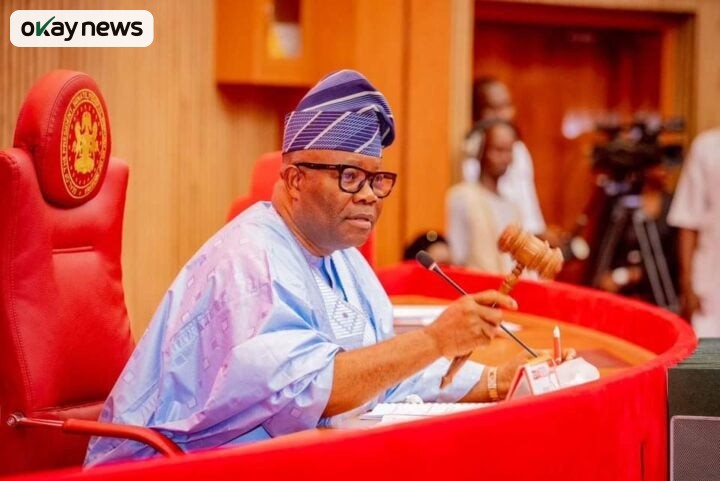
A statement signed by the Clerk of the Senate, Emmanuel Odo, said Nigeria’s Senate President, Godswill Akpabio, “has directed the reconvening of plenary for an emergency sitting on Tuesday, February 10, 2026.” Plenary is scheduled to begin at 12:00 noon West African Time (WAT, GMT+1).
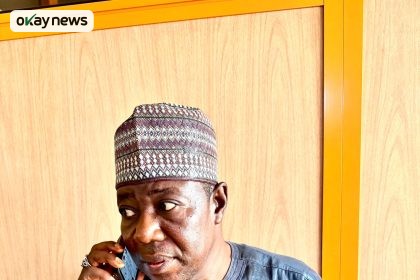
Okay News reports that tensions have been heightened by direct pressure on lawmakers, with a National Assembly source saying: “The reactions were unpredictable. Many were laying curses and asking them, ‘how do you sleep at night after this action?’” The report said some senators became harder to reach after their phone numbers circulated online.
The Nigeria Labour Congress (NLC), the country’s largest labour federation, has warned of nationwide protests and possible election boycotts if lawmakers do not take a clear position on mandatory electronic transmission.
On Monday, February 9, 2026, protesters under the banner of the Movement for Credible Elections gathered outside the National Assembly Complex. Peter Obi, a former governor of Anambra State in south-eastern Nigeria and the Labour Party’s presidential candidate in Nigeria’s 2023 election, joined demonstrators linked to the Obidient Movement, a youth-driven political network that gained prominence during that campaign.
Security forces prevented the crowd from entering the complex. Speaking to journalists, Obi said: “We must dismantle this criminality and prove that we are now a nation that shows light in Africa.”
Doctor Yunusa Tanko, National Coordinator of the Obidient Movement Worldwide, said protests would continue until lawmakers restore real-time transmission, adding: “If there is no electronic transmission of results, there will be no election. Our elections must be credible.”
Civil society groups, including the Kukah Centre and Yiaga Africa, urged legislators to conclude the amendment process within two weeks and retain mandatory real-time transmission. Coalition spokesman Jake Epelle said: “We reiterate our recommendation that the National Assembly should expeditiously conclude the amendment process and transmit the final bill to the President within two weeks.”
Cynthia Mbamalu, Yiaga Africa’s Director of Programmes, said: “It is unfair that the Senate wants to take us back on an issue we had addressed in the last reform process. The commission has told us previously that it has the infrastructure to do that.”
With the House of Representatives retaining a real-time requirement and a joint conference committee expected to meet this week, Tuesday’s sitting is widely seen as a test of whether the National Assembly of Nigeria will settle the dispute and clarify the rules governing results transmission.