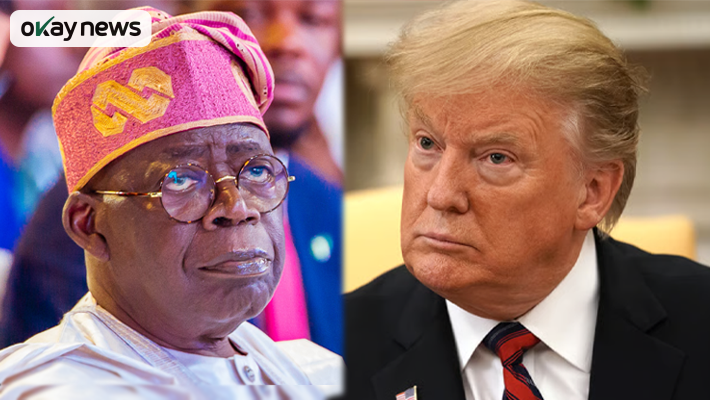
President Bola Ahmed Tinubu is set to meet with United States President Donald Trump to discuss allegations of a Christian genocide in Nigeria, according to the Nigerian Presidency.
Daniel Bwala, the Special Adviser to the President on Policy Communication, disclosed this development in a statement on X (formerly Twitter) on Saturday. He said the meeting would focus on counterterrorism collaboration, strengthening diplomatic ties, and addressing recent claims made by President Trump concerning religious persecution in Nigeria.
According to Bwala, both leaders share common ground on global peace and counterterrorism efforts.
“Both President @officialABAT and President @realDonaldTrump have shared interests in the fight against insurgency and all forms of terrorism against humanity,” Bwala said.
He noted that President Trump had previously supported Nigeria’s security operations by authorising the sale of arms during his administration, while President Tinubu has continued to consolidate those gains in tackling insurgency and terrorism across the country.
Okay News reports that Trump’s recent remarks have stirred international attention after he accused the Nigerian government of turning a blind eye to attacks on Christians and declared Nigeria a “country of particular concern.”
Trump had claimed that Christianity faced “an existential threat” in Nigeria, alleging that “thousands of Christians are being killed” by “radical Islamists.” He further warned that if the killings continued, the United States might suspend aid and consider “military intervention” to protect Christian communities.
“If the Nigerian Government continues to allow the killing of Christians, the USA will immediately stop all aid and assistance to Nigeria, and may very well go into that now disgraced country, ‘guns-a-blazing,’” Trump wrote on Truth Social, his social media platform.
His comments followed weeks of pressure from U.S. Congressman Riley Moore, who had urged the American government to redesignate Nigeria as a “Country of Particular Concern” and suspend military sales until the Nigerian government demonstrated clear progress in protecting all citizens.
However, the Nigerian government has consistently rejected claims of a religiously targeted genocide, maintaining that terrorist groups such as Boko Haram and ISWAP attack Muslims, Christians, and others alike without distinction.
Bwala clarified that the planned Tinubu-Trump meeting would help clarify these misconceptions and reinforce cooperation between Abuja and Washington on counterterrorism and human rights protection.
“As for the differences as to whether terrorists in Nigeria target only Christians or all faiths, those will be discussed and resolved by the two leaders when they meet in the coming days, either in the State House or White House,” he added.
Trump’s remarks have generated global debate, with analysts cautioning against escalating rhetoric that could strain Nigeria–U.S. relations.
Bwala reaffirmed that both Tinubu and Trump remain committed to “tackling insurgency and terrorism and strengthening cooperation in global peace and security.”