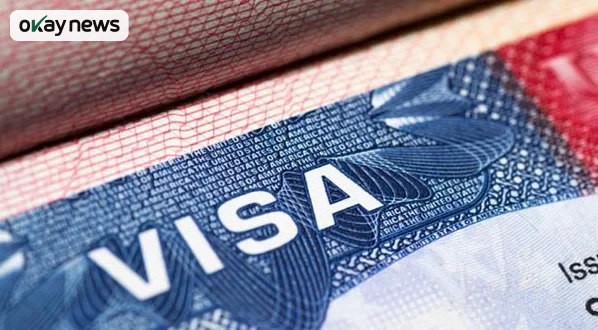
The Government of the United States of America has announced that it will begin a partial suspension of visa issuance to Nigerian citizens starting from Thursday, January 1, 2026, as part of a broader immigration policy aimed at reinforcing border management and national security.
The announcement was made by the United States Mission in Nigeria, which stated that the policy will take effect at 12:01 a.m. Eastern Standard Time, in line with Presidential Proclamation 10998, officially titled “Restricting and Limiting the Entry of Foreign Nationals to Protect the Security of the United States.”
Okay News reports that Nigeria is among 19 countries globally affected by the new proclamation. Other countries listed include Angola, Antigua and Barbuda, Benin, Burundi, Cote d’Ivoire, Cuba, Dominica, Gabon, The Gambia, Malawi, Mauritania, Senegal, Tanzania, Togo, Tonga, Venezuela, Zambia, and Zimbabwe.
According to the United States Department of State, the partial suspension applies to nonimmigrant B-1 and B-2 visitor visas, as well as F, M, and J visas, which are commonly issued to students and exchange program participants. The proclamation also extends to immigrant visas, although limited exceptions have been outlined.
The official statement explained, “Effective January 1, 2026, at 12:01 a.m. EST, in line with Presidential Proclamation 10998 on ‘Restricting and Limiting the Entry of Foreign Nationals to Protect the Security of the United States,’ the Department of State is partially suspending visa issuance to nationals of 19 countries … for nonimmigrant B-1 and B-2 visitor visas and F, M, J student and exchange visitor visas, and all immigrant visas with limited exceptions.”
United States authorities clarified that the policy does not apply universally. Exemptions include lawful permanent residents of the United States, dual nationals using passports from unaffected countries, and Special Immigrant Visa holders, particularly those who have worked with the United States government.
Additional exemptions cover immigrant visas for ethnic and religious minorities facing persecution in Iran, as well as participants in specific major international sporting events.
The United States government further stressed that the proclamation applies only to foreign nationals who are outside the United States on the effective date and who do not hold valid United States visas as of Thursday, January 1, 2026.
The statement added, “Foreign nationals, even those outside the United States, who hold valid visas as of the effective date are not subject to Presidential Proclamation 10998. No visas issued before January 1, 2026, at 12:01 a.m. EST, have been or will be revoked pursuant to the Proclamation.”
While visa applicants from affected countries may still submit applications and attend scheduled interviews, the United States Mission warned that such individuals may be deemed ineligible for visa issuance or admission under the new framework.
The development comes amid rising concerns among Nigerians seeking to travel, study, or migrate to the United States. In October 2025, the United States government added Nigeria back to its list of countries accused of violating religious freedom, citing persistent insecurity and attacks on Christian communities.
This was followed by Nigeria’s inclusion on a revised United States travel restriction list, as well as earlier decisions that reduced the validity of most nonimmigrant visas issued to Nigerians to single-entry permits with a three-month duration.
Although recent reports suggested that certain immigrant visa categories, including permanent residency permits commonly known as green cards, could face suspension, United States officials have reiterated that lawful permanent residents and holders of valid visas issued before the effective date remain protected.