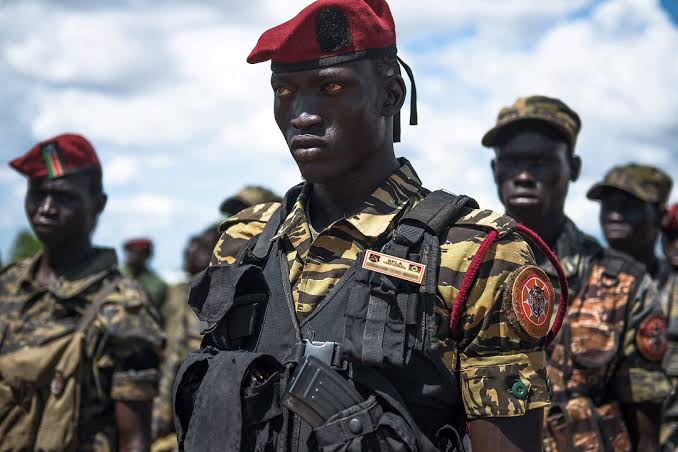
The South Sudanese military has issued a series of drastic orders mandating the complete evacuation of civilians and United Nations staff from several counties in Jonglei state. This directive precedes a major military operation aimed at reclaiming territories currently held by opposition forces, raising serious concerns about the safety of non-combatants residing in the conflict-prone region.
Okay News reports that the international community reacted with outrage following the release of a video featuring General Johnson Oluny, a deputy army chief. In the footage, the General is heard instructing his troops to “spare no-one,” specifically suggesting that children and the elderly should not be exempt from the impending military actions as they move to neutralize rebel strongholds.
The United Nations Mission in South Sudan (UNMISS) has formally condemned this rhetoric, labeling it as “abhorrent” and a direct threat to human rights. UN officials emphasized that such inflammatory language violates the basic principles of engagement and called on the government in Juba to ensure that its military leaders adhere to international law and protect vulnerable populations.
As the situation escalates, humanitarian agencies report that nearly 200,000 people have been forced to abandon their homes to escape the violence. Many civilians are reportedly hiding in swamps to avoid the crossfire, as the military’s chief of defense has set a strict seven-day deadline for government troops to decisively end the ongoing rebellion in the northern states.
This latest conflict highlights the continued breakdown of the 2018 power-sharing agreement between President Salva Kiir and his long-time rival, Riek Machar. With Machar currently facing a high-profile trial for treason and other serious charges, the political stability of the nation has further deteriorated, reigniting ethnic tensions that have historically plagued the country.
While the opposition claims it is preparing for a strategic advance on the capital city of Juba by late February, the national army has dismissed these threats as unrealistic. Military spokesmen maintain that while some rural areas remain under rebel influence, the government retains full control over strategic urban centers and is prepared for any eventualities as the conflict enters this dangerous new phase.